
PAU Hospitals Raise Awareness on World Stuttering Day, October 22
Pamukkale University (PAU) Hospitals’ Speech and Language Therapists Gizem Oruç and İsmail Emir Salınan made statements to increase societal awareness about stuttering on the occasion of World Stuttering Day, October 22.
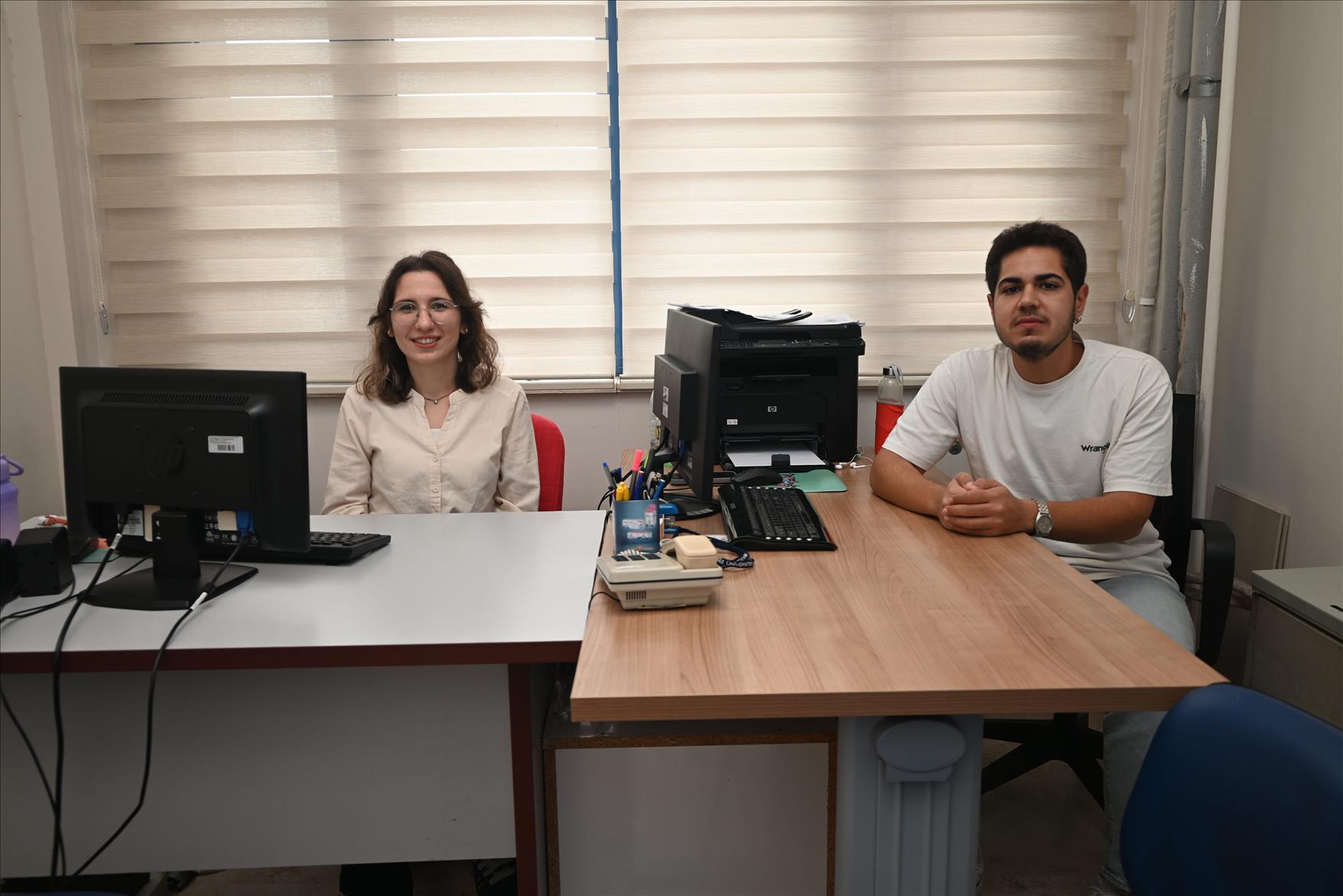
Speech and Language Therapists Gizem Oruç and İsmail Emir Salınan explained: “Stuttering is a fluency disorder characterized by the repetition or prolongation of sounds, syllables, and words, or by pauses at the beginning of speech. However, stuttering is not only a fluency problem. It can limit an individual’s competence in work, school, social relationships, or daily communication, reducing quality of life. Over time, this may lead to avoidance of communication, lack of self-confidence, and psychosocial difficulties. Individuals who stutter may display secondary behaviors to compensate for or avoid stuttering. These behaviors can include leg shaking, blinking, changing words during speech, or avoiding certain environments altogether. Over time, these behaviors can make stuttering more complex and harder to manage. Stuttering is generally categorized into developmental and acquired types. The most common type, developmental stuttering, usually begins in the preschool years. Approximately 75% of children with this disorder achieve fluent speech without intervention, while 25% may continue to stutter into adulthood. Spontaneous improvement is most likely within the first 6–12 months after onset, but it is impossible to predict in advance which child will recover naturally.”
Speech and Language Therapists: “Stuttering Is Not Just a Fluency Issue”
Oruç and Salınan also discussed risk factors that increase the likelihood of stuttering becoming chronic. These include a family history of fluency disorders, being male, onset after 3.5 years of age, persistence longer than 6–12 months, and the presence of additional speech-language disorders. They noted that although many theories exist regarding the causes of stuttering, a definitive cause has not yet been determined.
Gizem Oruç and İsmail Emir Salınan added: “Stuttering is a complex condition arising from a combination of genetic predispositions, environmental, neurological, physiological, and learned behavioral factors. Contrary to common belief, stuttering is not simply a psychological problem or the result of trauma. These misconceptions can negatively affect both the individual and those around them. The primary goal of stuttering therapy is to improve speech fluency and enable more effective communication. Therapy is always planned individually and carried out using evidence-based methods according to assessments. It is important to emphasize that only authorized health professionals, specifically Speech and Language Therapists, work with stuttering. Stuttering is not limited to speech interruptions; it has emotional, social, and cognitive dimensions. Therefore, when communicating with individuals who stutter, therapeutic communication principles must be observed. The individual should be given enough time to complete their speech, should not be interrupted, and should not be pressured to speak faster. Well-intentioned phrases such as ‘Relax, breathe, speak slowly’ can unintentionally create pressure. The listener’s attention should focus on what is being said, not how it is said. This approach helps the individual feel valued in communication and supports self-confidence. Stuttering is one of the most noticeable speech disorders in society, but with professional support and increased public awareness, it can be managed much more effectively. It should be remembered that stuttering is not a deficit, but a difference. As a society, our responsibility is to create a patient, unbiased, and informed communication environment that enables individuals who stutter to express themselves freely.”