
Rector Prof. Dr. Güngör Inaugurates Planning and Design Research–Application Laboratory
The Planning and Design Research–Application Laboratory, established within the Faculty of Architecture and Design at Pamukkale University (PAU) as part of an institutional infrastructure project supported by the Pamukkale University Scientific Research Projects Coordination Office (PAU BAP), was inaugurated in a ceremony.
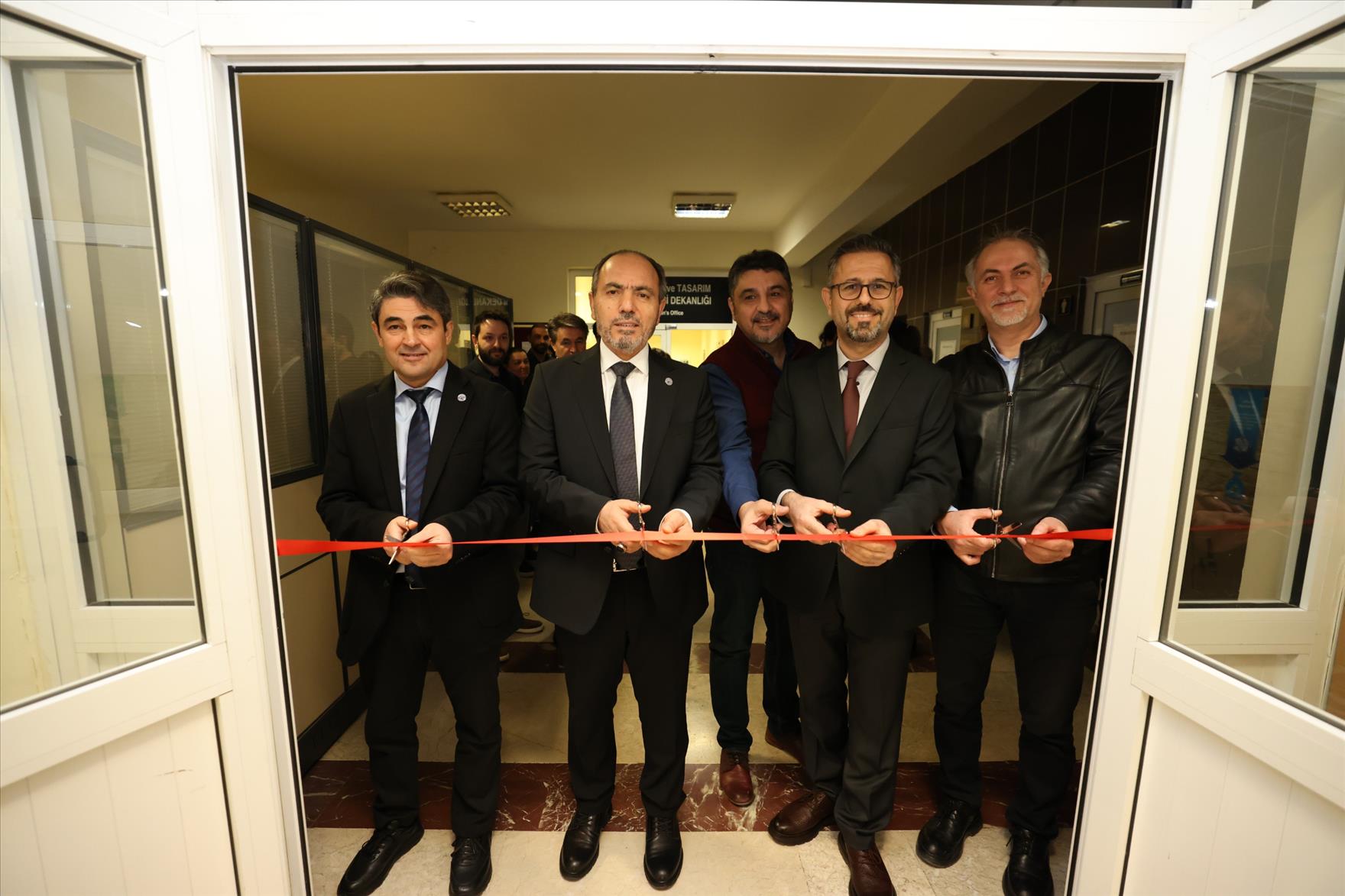
The laboratory’s opening was held with the participation of PAU Rector Prof. Dr. Mahmud Güngör and opening speeches by Acting Dean of the Faculty of Architecture and Design Prof. Dr. Mustafa Tamer Ayvaz and project principal investigator Prof. Dr. Murat Zengin.
The technical infrastructure required for education, research, and application processes in the fields of planning and design is undergoing a rapid transformation through digitalization, new software, and advanced production technologies, while traditional production and representation methods are being replaced by data-driven analyses, computational modeling, digital design, and prototyping processes. In this context, supporting academic work with contemporary technologies has become a strategic necessity to enhance the quality of education and training processes and to strengthen research capacity.
Established based on these needs, the Planning and Design Research–Application Laboratory aims to provide a shared, modern infrastructure to support the scientific research of faculty members at PAU Faculty of Architecture and Design, studio and application courses, and interdisciplinary collaborations. The laboratory is expected not only to enhance the quality of academic work conducted within the faculty but also to contribute to the development of innovative approaches in planning and design.
Equipped as part of the project, the laboratory includes four high-performance computers capable of running current software, four high-resolution wide-screen monitors, one projector, one 3D printer for prototype and model production, one high-quality plotter, one high-capacity portable data storage unit for secure storage of large datasets, one drone to support data collection and documentation in fieldwork, hardware for meetings and collaborative work, and up-to-date licensed software. This technical infrastructure allows for a wide range of applications, from design processes to analysis and visualization, prototyping, and fieldwork. The laboratory is also intended to lay the groundwork for university–industry collaborations and contribute to the creation of an R&D environment equipped with contemporary technologies.