
Applied Project Cycle Management (PCM) Training Held at PAU
An Applied Project Cycle Management (PCM) Training was organized for academic staff by the Project Support Office of Pamukkale University (PAU) with the participation of Vice Rector Prof. Dr. Ersan Öz.
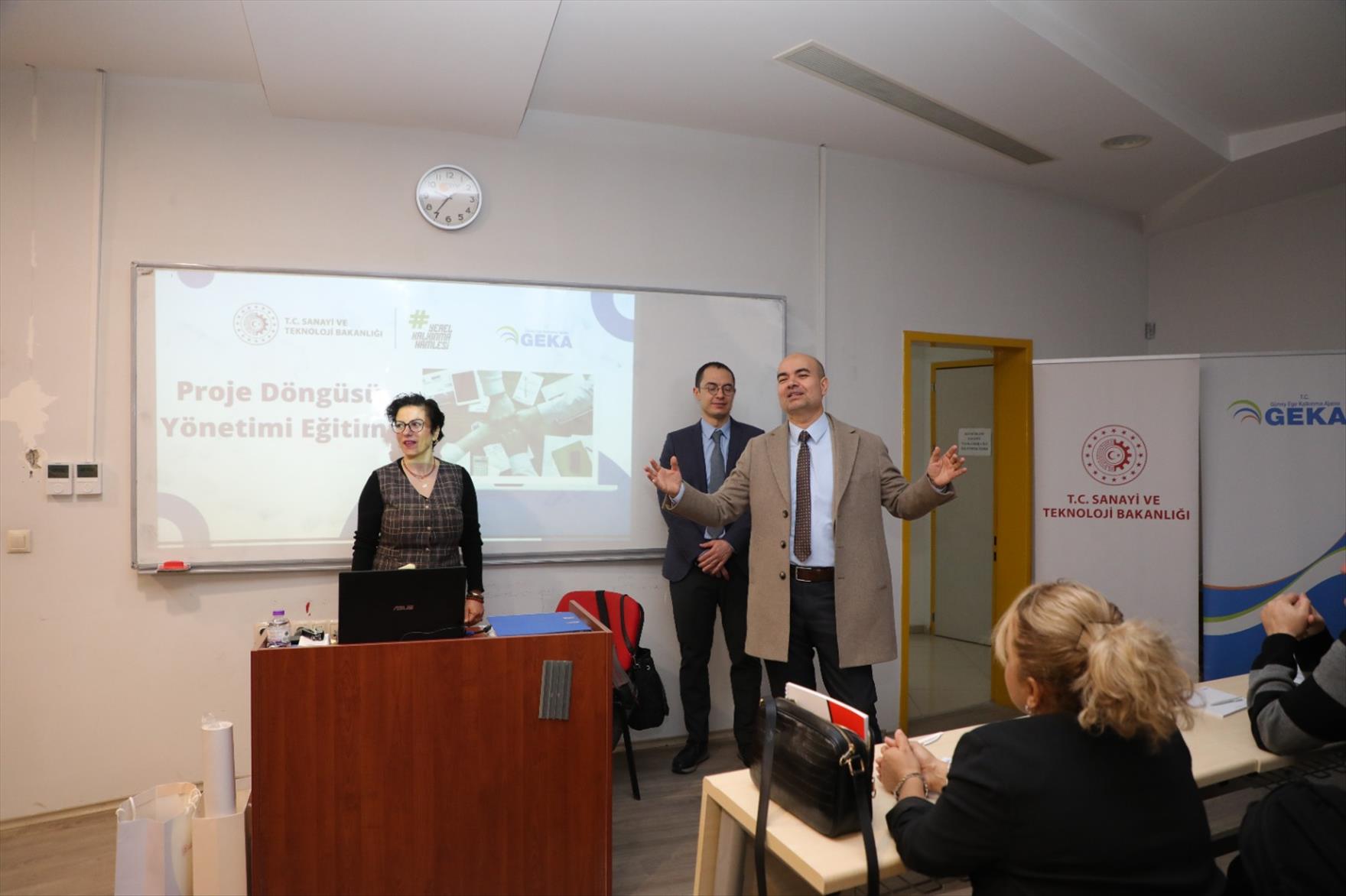
Speaking at the opening program of the training, which was held face-to-face over two days on February 12–13 at the PAU Faculty of Technology Conference Hall, Vice Rector Prof. Dr. Ersan Öz stated the following:
“We can say that the era of appointing academics without projects, rewarding without projects, and doing work without projects has come to an end. In fact, while working on these academic criteria, our Rector and Mehmet Hocam had focused on ensuring that everyone has a project and that students are directed toward projects, and this approach continues. This is the case worldwide and in Türkiye as well. Our Project Support Office, thanks to Uğur Hocam, organized such a training. It is also carried out at other universities. Songül Hocam also selflessly said that we could do it. There was a justified level of demand. Therefore, we planned to divide this demand into two classes. Why are you the first group of thirty? Because you were the first thirty applicants. After the two-day training, certification will also be provided. We want to carry out our future trainings in a more professional manner. I would like to thank everyone who applied and contributed, and we hope it will be beneficial for you. I also thank our instructor and our Project Support Office and wish them success.”
The Applied Project Cycle Management (PCM) Training, limited to a quota of 30 academics and conducted over two days, will be delivered by Project Expert Songül Başar from the Güney Ege Kalkınma Ajansı (GEKA). For other academics who applied but remained outside the quota, it is planned to repeat the same training in the spring semester.
GEKA Project Expert Songül Başar stated the following in her speech:
“Words we frequently encounter in projects—general objectives, project objectives, logical framework matrix, targets, stakeholders—you have all heard these terms, but in our training we will focus on what they actually mean in a clear and applied manner. I will generally address the project cycle from the initial idea stage to the end, including implementation, and I will also talk about the budgets through which the Development Agency can provide implementation support in projects. This training will also be shaped by your questions. More detailed application requirements regarding TÜBİTAK or other programs will be conveyed to you by the officials of the Project Support Office. Within the scope of the training I will deliver today, we will focus not on the application requirements but primarily on the project itself.”
The aim of the Project Cycle Management (PCM) trainings, which seek to enable participants to gain expertise from project idea development to implementation, monitoring, and evaluation stages regardless of funding sources, is to practically teach participants the planning, budgeting, and reporting techniques required throughout the entire process of a project—from the idea stage to implementation and evaluation of results. The program also aims to strengthen participants’ capacities in developing and managing projects for national and international funding programs.
Within the scope of the training, methods and techniques for preparing projects for national and international funding institutions such as TÜBİTAK, EU Grant Programs, the World Bank, KOSGEB, and Development Agencies will be conveyed in an applied manner using the “Project Cycle Management” approach. The training content includes topics such as What Is a Project, Project Cycle Management, Logical Framework Approach, Situation Analysis, Problem Analysis, Stakeholder Analysis, Objective Analysis, Strategy Analysis, Logical Framework Matrix, Activity and Resource Planning, Budgeting, and KAYS Project Entry.