
Awareness Call from PAU Hospitals on World Down Syndrome Day
Prof. Dr. Özmert M.A. Özdemir, Head of the Department of Child Health and Diseases and the Division of Neonatology at Pamukkale University (PAU) Hospitals, made statements on the occasion of “World Down Syndrome Day.”
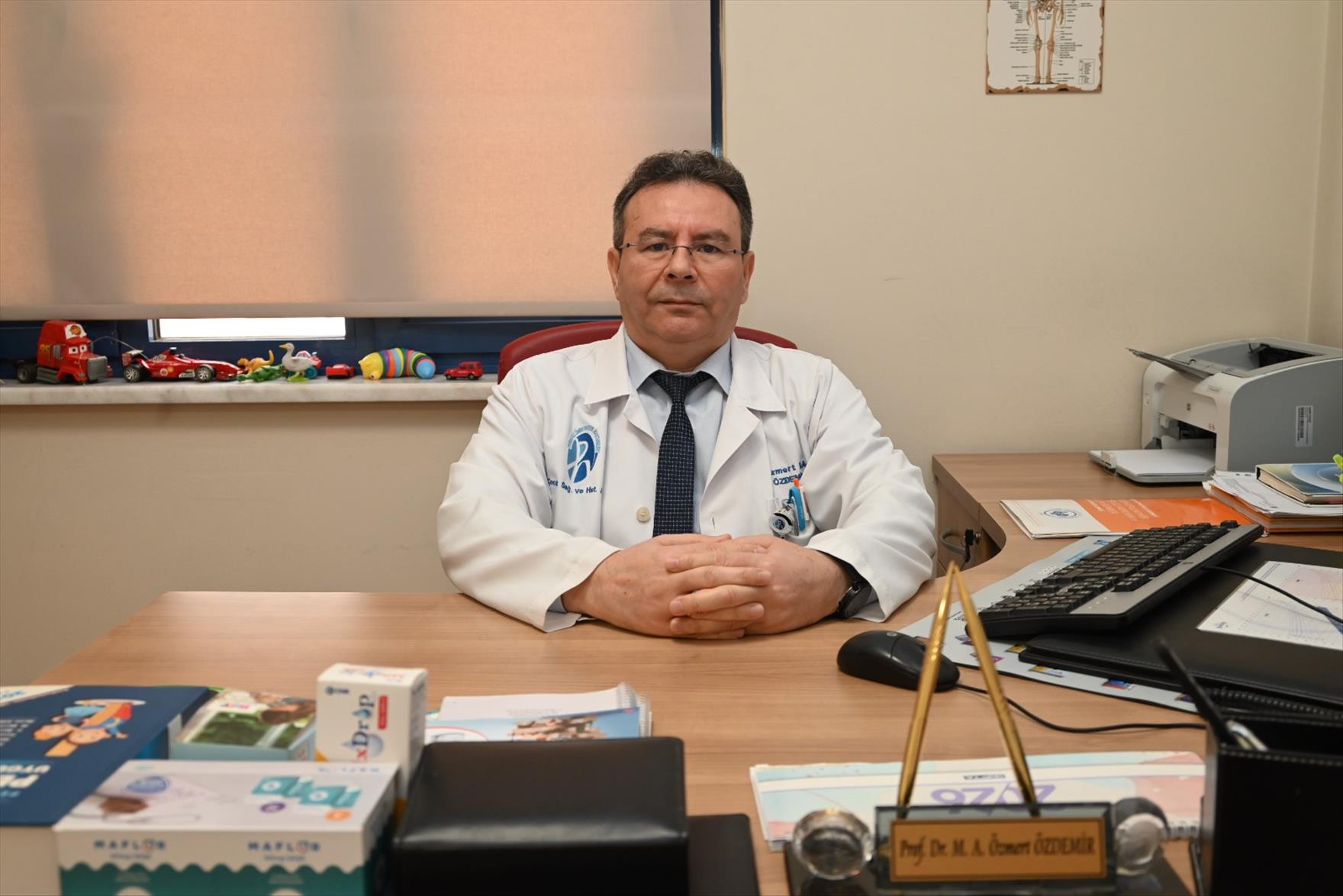
Prof. Dr. Özmert M.A. Özdemir, Head of the Department of Child Health and Diseases and the Division of Neonatology at PAU Hospitals, stated the following in his remarks: “Down syndrome (DS) is the most common chromosomal condition among live-born infants and is defined as trisomy 21. It is seen on average in one out of every 800 births. It is the most common type of intellectual disability resulting from a chromosomal abnormality that can be demonstrated microscopically. DS is characterized by various dysmorphic features, congenital malformations, and other health problems and medical conditions. Not all of these are present in every affected individual. The effect of DS on each individual is different; some individuals are virtuous, others are healthy and can live independently as adults. In general, individuals with DS can now reach their full potential thanks to better educational programs, medical advances, community groups, and the support of their families and friends. Since the incidence of Down syndrome and other autosomal trisomies increases in parallel with maternal age, prenatal diagnosis is routinely recommended for pregnancies over the age of 35, as prenatal diagnosis can be made by karyotype determination.”
Prof. Dr. Özmert M.A. Özdemir: “Dysmorphic features appear as differences in facial and body structure and vary in each individual.”
Referring to the typical clinical findings of Down syndrome, Prof. Dr. Özdemir emphasized that diagnosis can be made through genetic testing in infants suspected particularly based on characteristic facial findings (flattened nasal bridge, slanted eyes, epicanthal folds, short neck, short and broad hands, single transverse palmar crease, etc.), and continued his remarks as follows: “Since some congenital diseases that may accompany DS (such as heart, kidney, thyroid, eye, hearing and other endocrine and hematological diseases, growth retardation, cognitive status and musculoskeletal diseases) can be seen more frequently, a detailed evaluation should be conducted, families should be properly informed about the condition of the baby, and the patient should be followed clinically in a multidisciplinary manner by the relevant medical units for accompanying or potential additional diseases. In order to symbolize the triple repetition of chromosome 21 that causes Down syndrome, March 21, the 21st day of the third month of the year, has been designated as ‘World Down Syndrome Day’ and has been celebrated every year since 2007 as a special day to draw attention to the rights of individuals with Down syndrome and to raise awareness. Down syndrome is not a disease, but a genetic difference.”