
Global Water Agenda and Water Diplomacy Discussed at Midday Seminars
Within the scope of the “Midday Seminars” conducted by the Faculty of Economics and Administrative Sciences at Pamukkale University (PAU), a seminar titled “The Global Water Agenda and Türkiye: A Water Diplomacy Perspective” was held with the participation of Rector Prof. Dr. Mahmud Güngör.
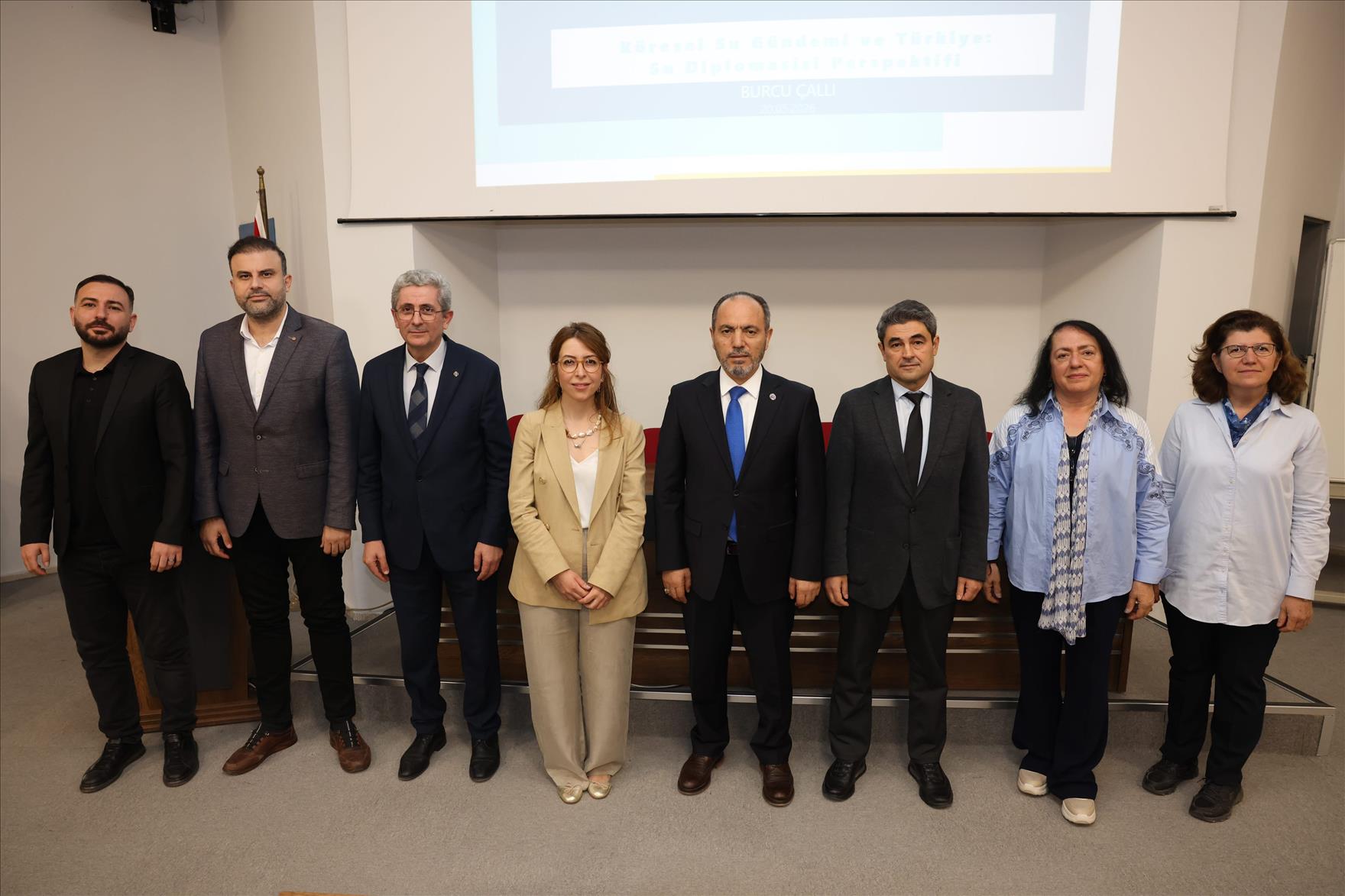
At the event, which opened with a speech by Pamukkale University Rector Prof. Dr. Mahmud Güngör, Türkiye Water Institute (SUEN) Water Diplomacy Expert Burcu Çallı evaluated the global water crisis, the growing role of water diplomacy in international relations, and Türkiye’s water policies.
In his opening remarks, Rector Prof. Dr. Mahmud Güngör emphasized that water is not only a natural resource but also holds strategic importance for the future of humanity, social welfare, and sustainable development. Highlighting the necessity of using water resources consciously, effectively, and efficiently, Rector Güngör also pointed out the need to increase public awareness to prevent water waste.
The seminar’s keynote speaker, SUEN Water Diplomacy Expert Burcu Çallı, provided comprehensive assessments of the global water agenda. Noting that although approximately seventy percent of the Earth’s surface is covered by water, usable freshwater resources constitute only a limited portion of the total water supply, Çallı stated that population growth, urbanization, climate change, and changing consumption habits continue to increase pressure on these resources. Drawing attention to the significant share of the agricultural sector in global water consumption, Çallı emphasized that if current trends continue, water scarcity could become a much more pronounced global risk factor.
The seminar also demonstrated that water diplomacy should be addressed not only within the framework of bilateral relations but also from the perspective of multilateral international cooperation. Transboundary waters, regional cooperation, global water governance, and the role of international organizations were among the topics discussed within this framework. It was also emphasized that digitalization, data management, new financing models, and circular economy approaches will shape future water policies.