
Roadmap for Branding Denizli Cuisine in Tourism Presented During Turkish Cuisine Week
Pamukkale University (PAU) Faculty of Tourism Dean Prof. Dr. Serkan Bertan shared the roadmap prepared for the branding of Denizli cuisine in tourism during his speech at Tavas Vocational School as part of Turkish Cuisine Week.
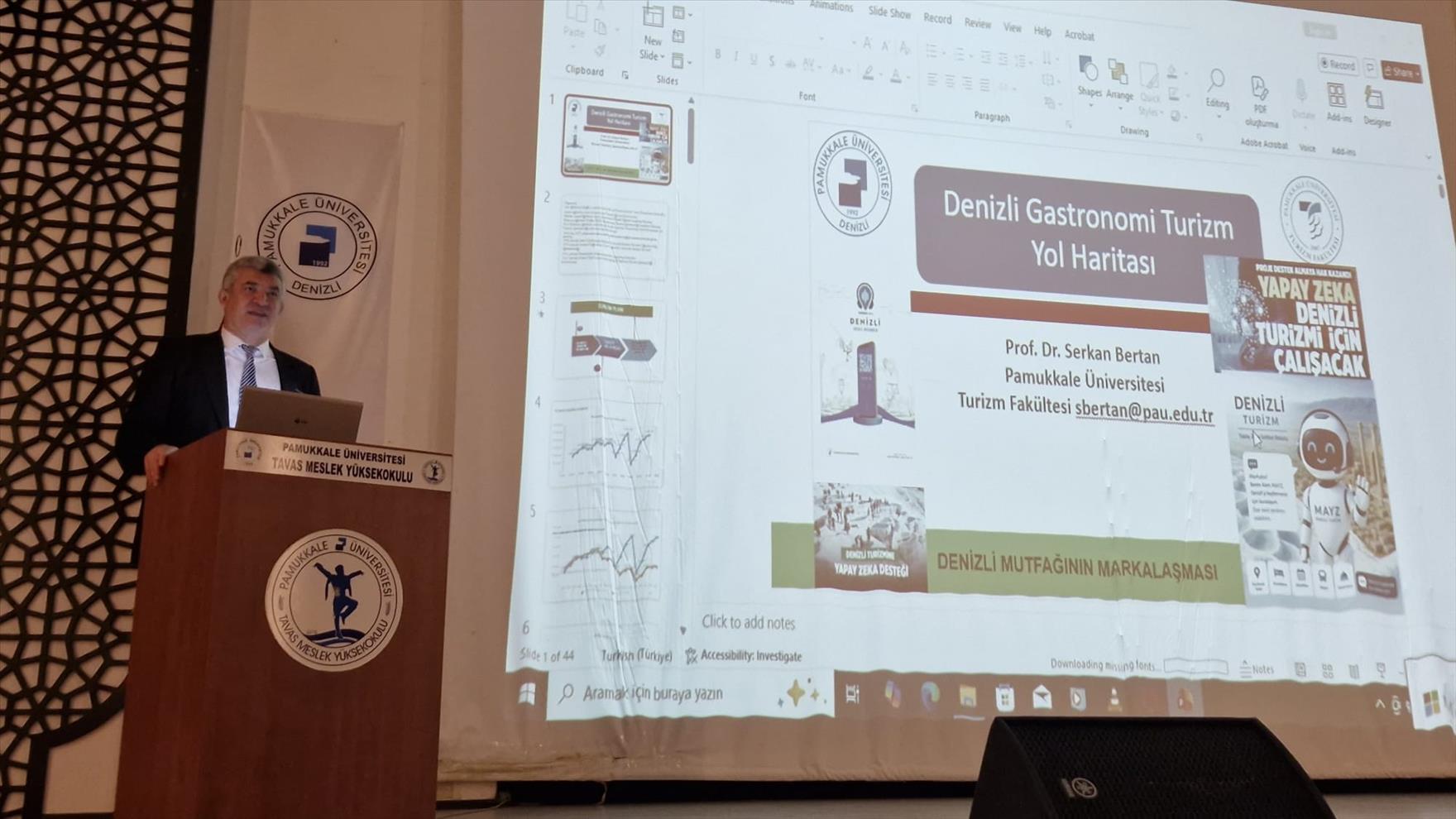
As a result of research conducted by Prof. Dr. Bertan, it was determined that geographical characteristics, lifestyle, working life, economic livelihoods, seasons, climate, and agricultural products play a role in the formation of the 162 local delicacies found on Denizli tables. Prof. Dr. Bertan explained the roadmap prepared for Denizli cuisine as follows:
“To brand Denizli cuisine in tourism, the Denizli Gastronomy Map should be distributed in print, MiniaGastroDenizli should be established, and gastronomy festivals (roasted chickpea, cherry blossom, and top tarhana festivals) should be organized. QR-coded signs should be placed for the vineyard route and geographically indicated products. Gastronomy routes (Cankurtaran, Karataş, Pınarlık, Kızılcabölük, Vakıf, and Tavas) should be created. Sales points for local products should be established along these routes. Earth Market, where local producers offer products made through natural and sustainable methods directly to consumers, as well as sales points for geographically indicated products, should be established, and workshops should be organized in these areas. Denizli culinary museums (KUDEP (Denizli House), Osman Bey Mansion, İbrahim Çallı Art House, Konyalıoğlu House (Blue House), and Tavas Culture and Art House) should be established. In the gastronomy museum/house, local dishes should be presented by women’s cooperatives, and information about these dishes should be provided. At the Denizli Gastronomy Museum or Gastronomy House, local dishes from a specific district should be prepared daily by women’s cooperative representatives through prior reservation; gastronomic products should be presented together with their stories, courses should be offered to revive nearly forgotten flavors, and kitchen utensils and equipment should be introduced. The stories of local flavors should be conveyed through experiential activities and regional culinary workshops. Culinary workshops should provide opportunities to learn traditional recipes through hands-on preparation and tasting. Information from the study titled ‘Denizli Tandoor Kebab as a Traditional Product in Denizli Gastronomy Tourism’ should be accessible through QR codes on tables and displayed in visible locations for guests. The Denizli Tandoor Kebab recipe should be highlighted: https://dergipark.org.tr/tr/download/article-file/3833592.”
Prof. Dr. Bertan continued his remarks as follows:
“Applications for geographical indication registration should be submitted to the European Union. In order to transfer our local products and traditional craftsmanship to future generations, support producers in local development, and promote our values worldwide, European Union geographical indication applications should be prepared for Top Tarhana, Karahöyük Bread, Biber Tatarı, Spoon Halva, Semolina Halva, Gelinardı, Meat Gevrek, Çağla Dövmesi, Bestel Dessert, Keş Kurusu, Garma Gatma, Çaput Aşı, Bakla Kaynatması, Three-Ears Dessert, Molivelli Pickle, Stuffed Tahini Pide, and Snow Syrup. The Cheesemakers’ Bazaar should be designed as a cultural and experiential center. Within the Culture Road Festival, the Denizli Flavor Festival should be organized, where classic flavors unique to Denizli cuisine should be presented and the story of a delicious journey through Denizli culture should be told. The promotion and sale of local products within the scope of agro-tourism should be supported; agricultural production should be integrated with tourism through farmer-tourist meetings and harvest festivals. Buldan Chestnut, Denizli Thyme, Denizli Çalkarası Grape, Honaz Cherry, Kale Pepper, Çameli Bean, İsabey Seedless Grape, Acıpayam Melon, Acıpayam Çakır Carrot, Avşar Grape, Honaz Persimmon, and Çameli Walnut should be incorporated into practical applications within this framework. The experience-oriented ‘Pick-your-own’ model should be implemented in villages. Packaging and branding processes should be supported to ensure the integration of local products with tourism. The inclusion of local products on online shopping platforms should be encouraged. For rural development, local administrations should focus on the ‘Come from the Village, Buy and Pay’ model. Businesses should be supported to include the 162 local delicacies featured on the Denizli Gastronomy Map in their menus. Restaurants should create tasting menus featuring local dishes; support should be provided for restaurants to source products from local producers, and the presentation of regional products should be encouraged. Local dishes should be included in events. A Living Heritage Festival should be organized for Denizli Cuisine.”
Prof. Dr. Bertan: “The AI-supported chatbot MAYZ should be promoted for the branding of Denizli cuisine in tourism”
Developed by Prof. Dr. Serkan Bertan with the aim of strengthening gastronomy tourism potential through an artificial intelligence chatbot model, MAYZ introduces Denizli cuisine, local delicacies, and gastronomy routes. Concluding his speech, Prof. Dr. Bertan emphasized the need to promote MAYZ, which provides information about the 162 local delicacies identified in Denizli and can guide users regarding the Denizli Gastronomy Map, the geographically indicated products route, and the local flavors trail.