
Academic Promotion Criteria Updated at PAU
Pamukkale University (PAU) has updated its Academic Promotion and Appointment Directive to enhance scientific output and increase competitiveness in higher education. The new criteria, prepared by a commission led by Vice-Rector Prof. Dr. Mehmet İnel under the guidance of Rector Prof. Dr. Mahmud Güngör, emphasize scientific quality and international impact over mere publication counts.
Pamukkale University (PAU) is preparing not only its students but also science itself for the future with its new vision. Approved by the PAU Senate, these updated criteria reflect the university’s goal of becoming a global research university.
Scientific Quality Takes Priority Over Publication Count
With the new directive, the era of evaluating academic promotions solely based on the "number of publications" has ended. From now on, the quality and international impact of research will be prioritized. In academic promotions, the impact factor of journals where articles are published, citations received, patents, and scientific or socially beneficial projects will be determining factors. This change aims to ensure that the knowledge produced at the university does not remain only in libraries but resonates worldwide.
Information Meeting Held with Participation of 350 Academics
A comprehensive information meeting was held at the Prof. Dr. Hüseyin Yılmaz Congress and Culture Center to explain the new criteria. Approximately 350 academics from various faculties attended the event. During the meeting, the university administration shared its objectives and how the new criteria would be implemented. Participating academics noted that this new period, emphasizing merit and quality, is an important step that will enhance the university’s reputation.
Rector Güngör: “Our Goal is Not More, But More Effective Science”
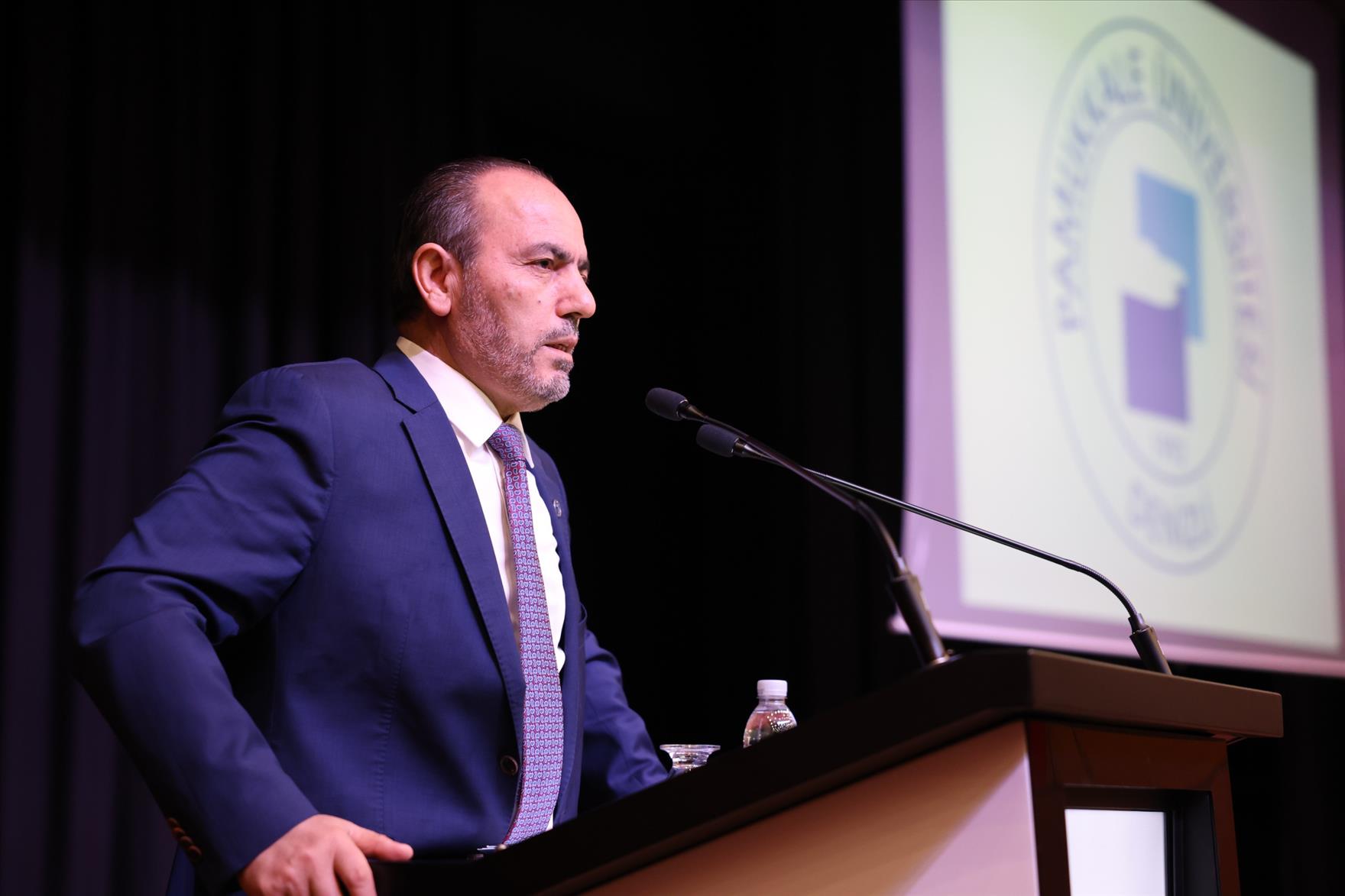
Speaking at the meeting, Rector Prof. Dr. Mahmud Güngör stated that academic promotion is more of a scientific responsibility than a change in title. Explaining the background of the new criteria, Rector Güngör said: “Universities are not only places where knowledge is consumed but also where it is reproduced. At Pamukkale University, our goal is not merely to increase numbers but to produce quality work. Our new criteria encourage our academics to contribute to global science. Our aim is not 'more publications' but 'more effective science.' We do not accept mediocrity in science. We want to build an academic staff that meets universal standards, is innovative, and directly contributes to our country’s development. This change will place PAU in its rightful position in global rankings.”
Prof. Dr. Mehmet İnel Explained Technical Details
Vice-Rector Prof. Dr. Mehmet İnel shared the technical details of the implementation during the meeting. Explaining the advantages of the new scoring system, Prof. Dr. İnel emphasized that the process will be conducted transparently and fairly. He also noted that the system will further support interdisciplinary collaborations and international projects such as those funded by TÜBİTAK and the European Union, while answering questions from academics.
This new system provides a clear roadmap, especially for young researchers. International collaborations and industry-focused R&D activities are given greater importance. In this way, academics are expected to engage not only in laboratories but also directly with life and industry. PAU students will thus be educated by an academic staff involved in projects that shape the world.
PAU Prepares Science and Students for the Future
With these updated criteria, Pamukkale University aims to support Denizli’s industrial and cultural potential through scientific research. The new system will enable the university to fulfill its societal responsibilities more effectively and guide scientists to produce at universal standards.