
Artificial Intelligence and the Entrepreneurship Ecosystem Discussed at the Economics Summer Seminars
At the International Economics Summer Seminars organized by the Pamukkale University (PAU) Faculty of Economics and Administrative Sciences (FEAS), Prof. Bülent Güloğlu, a faculty member at Istanbul Technical University and Chairman of the Board of İTÜNOVA Technology Transfer Office, evaluated the impact of artificial intelligence and the entrepreneurship ecosystem on economic growth using data from Türkiye.
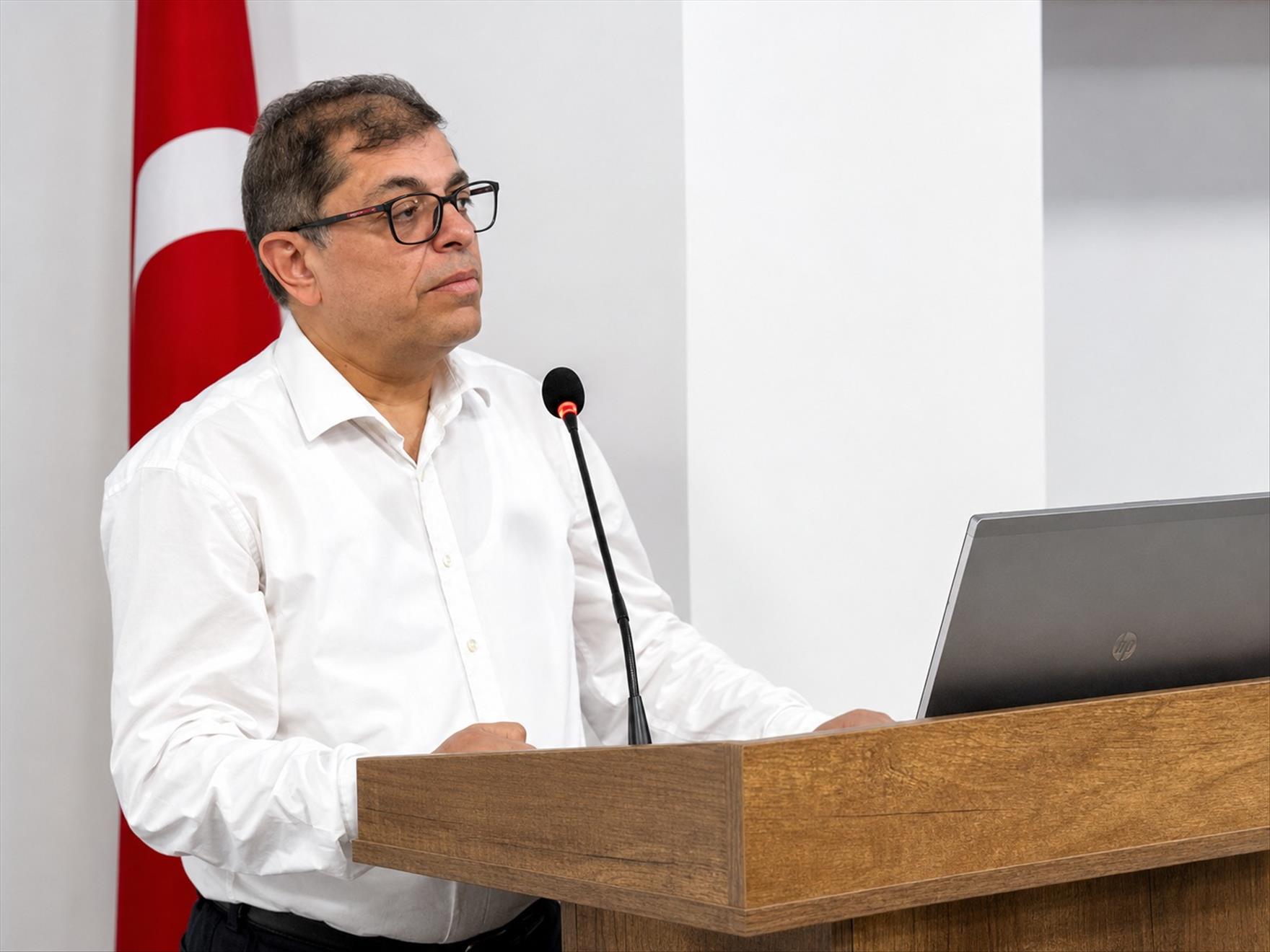
Prof. Bülent Güloğlu, faculty member at Istanbul Technical University and Chairman of the Board of İTÜNOVA Technology Transfer Office, was the guest speaker at the event organized within the scope of the International Economics Summer Seminars 2026 (EYS’26) hosted by the Pamukkale University Faculty of Economics and Administrative Sciences.
In his opening remarks, FEAS Dean Prof. Ender Coşkun emphasized that the Economics Summer Seminars continue to bring together topics and speakers that reflect the requirements of the modern era. He thanked the participants for their strong interest in EYS and expressed his appreciation to Prof. Bülent Güloğlu.
Prof. Güloğlu: “The artificial intelligence ecosystem is not limited to technological developments alone; knowledge production, digital infrastructure, financing opportunities, qualified human resources, and entrepreneurial capacity are complementary components of this system.”
Prof. Bülent Güloğlu delivered a presentation titled “The Impact of the Artificial Intelligence and Entrepreneurship Ecosystem on Economic Growth: An Econometric Analysis of Türkiye.” The presentation examined recent developments in artificial intelligence in relation to entrepreneurship, economic growth, innovation, and technology policies.
Prof. Güloğlu stated that the artificial intelligence ecosystem is not limited solely to technological developments and emphasized that knowledge production, digital infrastructure, financing opportunities, qualified human resources, and entrepreneurial capacity are complementary components of the ecosystem. He highlighted that the simultaneous development of these components is essential for enhancing countries’ productivity, competitiveness, and sustainable growth performance. Current data on the development of artificial intelligence models, scientific publications, patent applications, data centers, and investment trends were also shared with the participants. Based on these indicators, the current state of the global artificial intelligence ecosystem and the transformation it has undergone in recent years were evaluated.
Prof. Güloğlu also emphasized the strategic importance of developing local language models for artificial intelligence applications. He noted that large language models in Turkish could contribute to more accurate contextual and semantic processing of Turkish-language content and stated that efforts in this field should also be evaluated from the perspectives of technological independence and data sovereignty. In the final part of the seminar, econometric analyses based on data from Türkiye examining the relationship between artificial intelligence capacity, the entrepreneurship ecosystem, and economic growth were presented. Based on the findings, Türkiye’s current position in the artificial intelligence ecosystem, its development potential, and policy priorities were discussed.
During the question-and-answer session following the presentation, participants asked Prof. Güloğlu questions regarding the future of artificial intelligence technologies, their potential impact on employment, domestic artificial intelligence models, and entrepreneurship policies.
The conference concluded with the presentation of a certificate of appreciation to Prof. Bülent Güloğlu by FEAS Dean Prof. Ender Coşkun, followed by a group photograph.
The EYS’26 program continues with practical courses and academic seminars held at the Pamukkale University Kınıklı Campus between July 6 and 31.