
Artifacts Unearthed at the Stratonikeia Ancient City Excavation Are Being Restored with the Contributions of Students
At the ancient city of Stratonikeia, located in the Yatağan district of Muğla, where excavation works are carried out by Pamukkale University (PAU), students spend part of their education in the field through hands-on practice. Historical artifacts unearthed during the excavations are restored by PAU students, contributing to the preservation of cultural heritage.
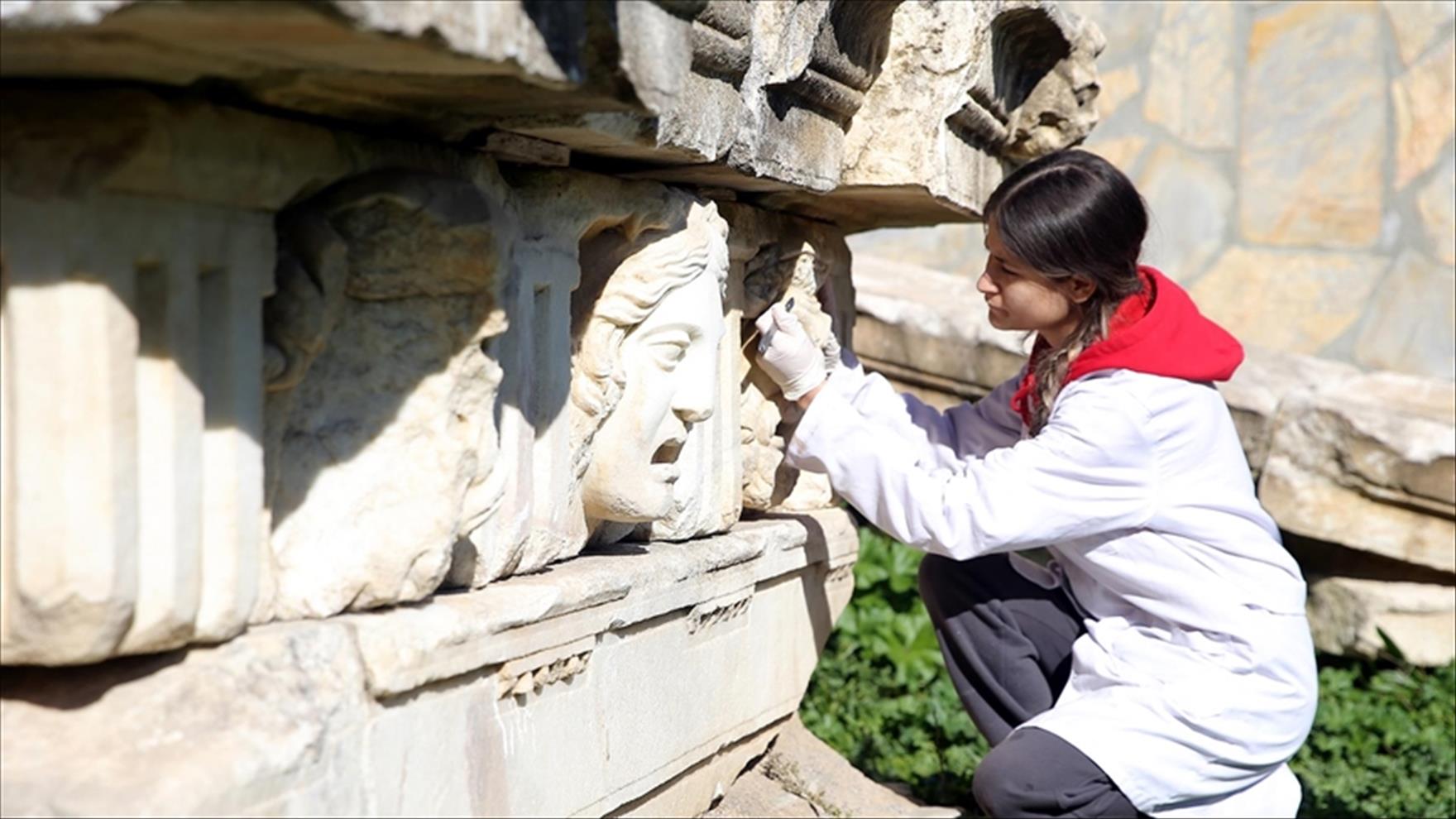
Stratonikeia, which is on the UNESCO World Heritage Tentative List and is known as the “city of gladiators” as well as being considered among the largest marble cities in the world, holds great importance for the Hellenistic, Roman, and Byzantine periods, as well as for the Menteşe Principality, Ottoman, and Republican periods. Prof. Dr. Bilal Söğüt, a faculty member of the Pamukkale University Department of Archaeology and Head of the Stratonikeia and Lagina Excavations, stated that excavation and restoration works in the ancient city continue throughout the year. Noting that restoration work continues in indoor areas during periods when no excavation is carried out, Söğüt said that stone artifacts weighing up to approximately 5 tons are transported and repaired with the help of cranes in the restoration workshop. Prof. Dr. Söğüt also stated that within the scope of a new practice initiated this year, students of the Pamukkale University Buldan Vocational School Architectural Restoration Program carry out part of their education directly in the excavation area through hands-on practice.
Hands-on Training in Restoration and Excavation
Explaining that students work in different units in 15-day periods and learn all stages of the excavation and restoration process on-site, Söğüt said: “Students who come here observe all stages of a find, from its removal from the field to its drawing, from its transfer to a digital environment to its cleaning and restoration, through hands-on practice. They have the opportunity to experience all processes, including mechanical and chemical cleaning procedures and the reassembly of broken blocks.”
Stating that there are different areas of specialization in restoration work, Söğüt noted that some students are interested in mosaics, others in frescoes, stone, or drawing, and that students can specialize over time in the fields they are interested in. Emphasizing that the experience students gain in the field is of great importance for their professional careers, Söğüt said: “When they leave here and go to another excavation, there is almost no application they have not encountered.”