
Visitor Profile of Denizli’s Tourism Sector Is Changing
Dean of Pamukkale University (PAU) Faculty of Tourism, Prof. Dr. Serkan Bertan, assessed accommodation data for 2014–2025: while Asia’s share is declining, Europe and the Americas are gaining prominence.
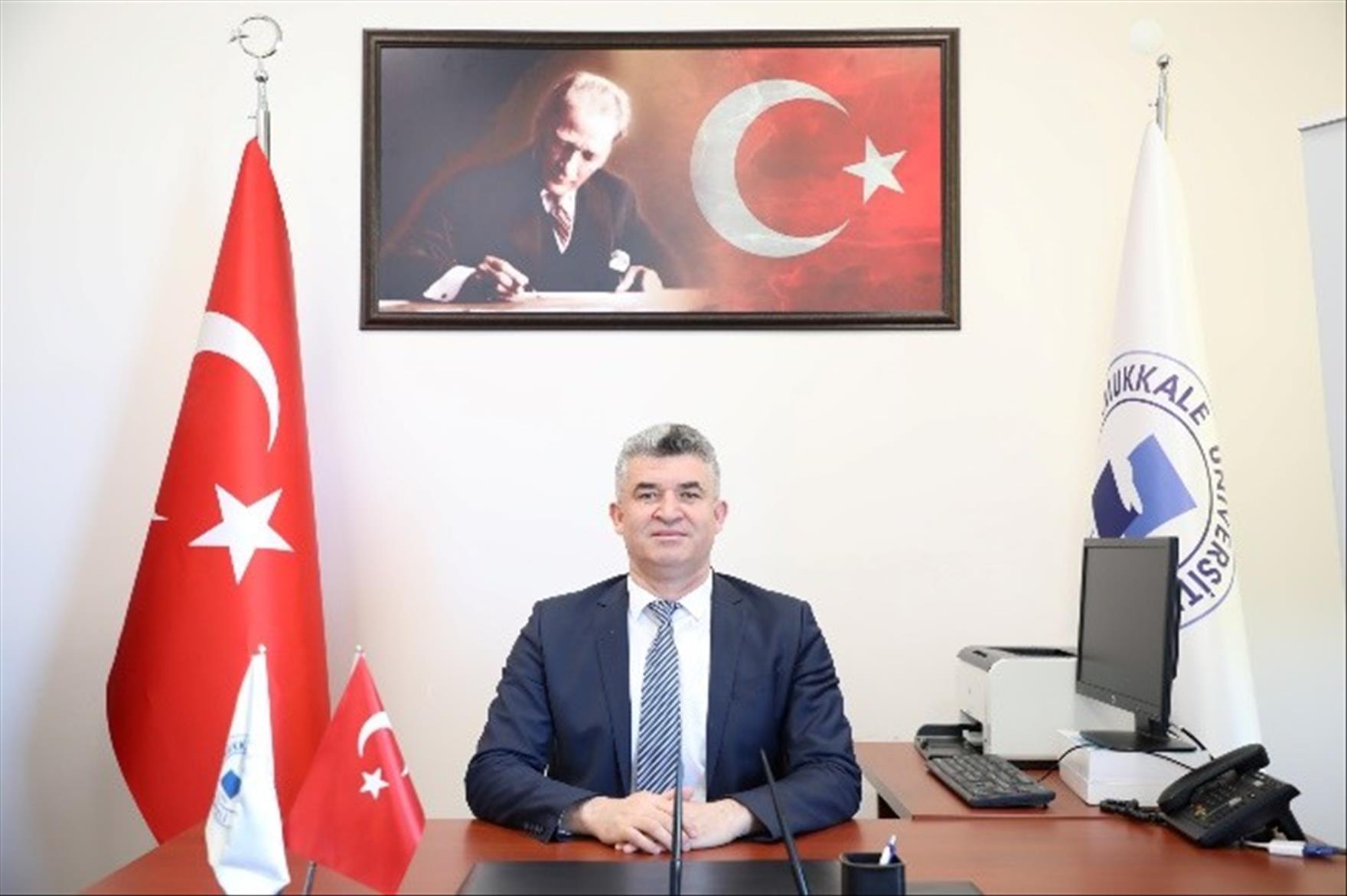
Prof. Dr. Serkan Bertan, Dean of Pamukkale University Faculty of Tourism, assessed data on the nationalities, length of stay, and seasonality of foreign tourists staying at accommodation facilities in Denizli. According to the information shared by Prof. Dr. Bertan, the top three countries sending the highest numbers of visitors to Denizli in 2025 were South Korea (78,635), China (64,602), and Italy (59,119).
Asia’s Share Declines as Europe and the Americas Gain Ground
Drawing attention to changes in the visitor profile, Prof. Dr. Bertan noted that in 2019, China and Taiwan alone accounted for nearly half of visitors from these 15 countries, whereas their combined share had fallen to 18% by 2025. During the same period, the share of Northeast Asia, comprising South Korea, China, Japan, and Taiwan, declined from 69% to 38%. This decrease was offset by Europe, including Italy, Germany, Spain, and France, whose share rose from 8% to 28%, and the Americas, including the United States, Brazil, and Mexico, whose share increased from 8% to 17%.
According to Prof. Dr. Bertan, the recovery across Northeast Asia varies from country to country. China, which sent approximately 160,000 visitors annually in 2018–2019, recorded the fastest growth between 2023 and 2024 and maintained that level in 2025. South Korea, meanwhile, has grown steadily since 2021, surpassed its 2019 level, and ranked first in 2025. Although Japan has continued to grow since 2023, its visitor numbers remain well below the 2014 level. Indonesia and Malaysia, among the countries that reopened early after the pandemic, peaked in 2022 and have been declining since then.
Italy Reaches 6.5 Times Its 2019 Level
Emphasizing that Europe has experienced the strongest recovery among the regions following the decline in 2016–2018, Prof. Dr. Bertan stated that the number of visitors from Italy had reached 6.5 times its 2019 level. The number of visitors from Germany doubled in 2025 compared with the previous year, but remained below half of its 2014–2015 level. The number of visitors from Russia increased every year from 2020 onward, reaching 2.6 times its 2019 level in 2025. Italy, Spain, the United States, and Brazil recorded their highest figures for the 2014–2025 period in 2025. Visitors from the Americas have also become a consistent presence since 2022.
Length of Stay at Tourist Destinations Is Shortening
Prof. Dr. Bertan stated that foreign tourists mostly stayed for one night in Denizli during the 2014–2019 period, while in 2025, the average length of stay declined across all 15 countries compared with 2024. The lowest annual average stays were recorded for Poland (1.11 nights), Japan, and Taiwan (1.13 nights each). The decline became more pronounced after April 2025. Between January and March 2025, the length of stay was higher than in the same period of 2024 for 10 of the 15 countries. From April to December, however, it fell below the 2024 level for all 15 countries. Mexico recorded the longest average stay in both 2024 and 2025, at 1.71 and 1.59 nights, respectively. In Germany, the average stay fell from 1.77 nights in 2023 and 1.56 nights in 2024 to 1.32 nights in 2025. In 2025, visitors from Asian countries stayed for between 1.1 and 1.4 nights. Prof. Dr. Bertan noted that these figures suggest that group tours from Asia generally include a one-night stay when visiting Pamukkale.
October Is the Peak Month
October was the month with the highest number of tourist arrivals each year. According to the information shared by Prof. Dr. Bertan, October was the busiest month for foreign visitors in all three years: 14.2% of annual foreign arrivals occurred in October in 2023, 13.6% in 2024, and 15.6% in 2025. Across the three-year period, October was followed by September at 12.0%, May at 11.0%, and April at 10.9%. The months with the fewest arrivals were January (4.1%), February (4.5%), and December (5.1%).
Prof. Dr. Bertan also drew attention to the growing concentration of foreign tourist demand in the summer and autumn months. The share of annual foreign arrivals occurring between November and March fell from 35.4% in 2023 to 24.0% in 2025. Between 2023 and 2025, the number of foreign tourists arriving in April increased by 129.6%, in May by 76.3%, and in October by 56.0%. In contrast, arrivals declined by 25.6% in January and 51.0% in March. In 2025, March was the quietest month of the year, accounting for just 2.8% of annual foreign arrivals.
The Leading Country Varies from Month to Month
According to Prof. Dr. Bertan, the country sending the most foreign tourists in each month changed considerably over the three-year period. Indonesia led during the first four months of 2023; in January 2023, Indonesians accounted for 23.3% of foreign visitors staying at accommodation facilities. In 2024, China ranked first in six of the 12 months. In 2025, South Korea took the top spot in 10 of the 12 months, with China leading only in July and Italy in August.
Italian Tourists Arrive in August, Chinese Tourists in October
Highlighting the consistency of certain countries’ travel patterns, Prof. Dr. Bertan noted that Italy reached its peak in August in all three years, making it the leading country for that month. One in every five foreign visitors staying at accommodation facilities in Denizli in August was Italian (20.0%), and 20.4% of all visitors from Italy stayed in the city during that month. China and Brazil both recorded their highest numbers in October each year, while Spain and Poland peaked in September. September accounted for 21.4% of arrivals from Poland and 17.7% of arrivals from Spain. Russia, meanwhile, had two distinct peaks: 42.9% of visitors from Russia stayed in Denizli in April and October alone.
Asian Countries Play a Key Role in the Winter Months
Prof. Dr. Bertan stated that Asian countries play a decisive role during the low season. Across the three-year period, 21.5% of foreign tourists arriving in January came from South Korea, while 29.8% came from Indonesia and Malaysia combined. February was the busiest month for arrivals from Malaysia, whereas August was the quietest month of the year for both Indonesia and Malaysia. South Korea was the leading source of foreign visitors in December in all three years, accounting for 13.8% of arrivals that month.
Year-Round Arrivals Are More Evenly Distributed
According to Prof. Dr. Bertan, the peak month varies from year to year for South Korea, Malaysia, Germany, Taiwan, Japan, and Hong Kong, with arrivals from these countries distributed more evenly throughout the year. Even October, the busiest month for South Korean visitors, accounted for only 12.4% of arrivals from South Korea over the three-year period. Arrivals from Germany, meanwhile, were concentrated in April, October, and November, with 16.7% of German visitors staying in November. Prof. Dr. Bertan emphasized that Germany and Asian countries are therefore important in extending the tourism season.