
PAU Academic Presents Cultural Heritage at COP31
Prof. Dr. Ayşegül Koyuncu Okca, Head of the Department of Handicrafts at Pamukkale University (PAU), attended the COP31 Climate Summit at the invitation of the United Nations Development Programme (UNDP). At the “Digital Communities for Climate Action: Villages of Tomorrow” panel held in the Blue Zone, she presented the cultural heritage experience of the Denizli-Bozkurt-İnceler Digital Centre on an international platform.
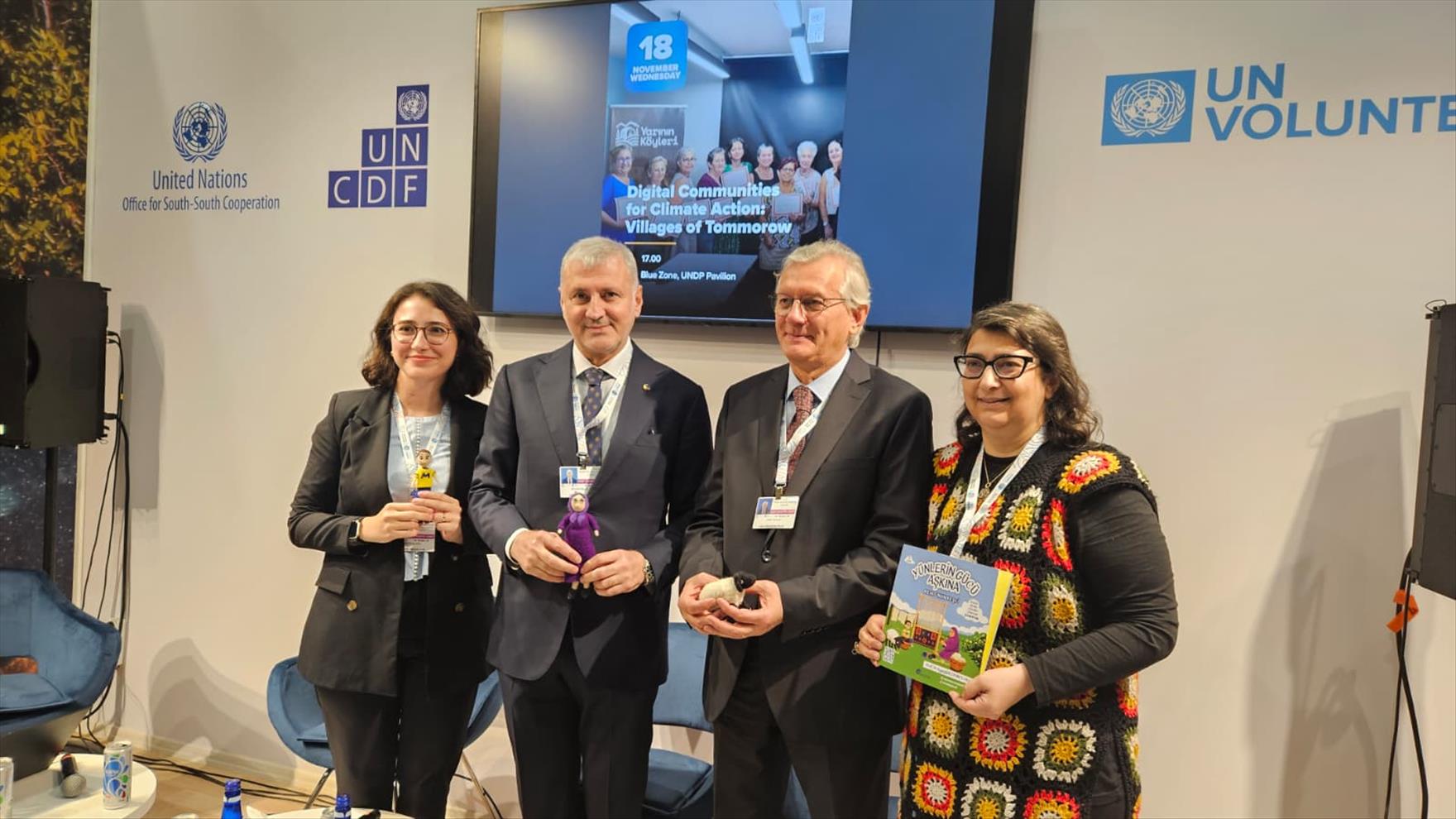
On Wednesday, November 18, the session titled “Digital Communities for Climate Action: Villages of Tomorrow” was held at the United Nations Development Programme (UNDP) Türkiye Pavilion in the COP31 Blue Zone Event Area at the Expo Antalya Campus. The session took place as part of the summit’s “Day 10: Human and Social Development” theme. Moderated by Elif Bilge Avcı, Trendyol’s Sustainability and Social Impact Lead, the panel addressed rural development, digital transformation, sustainable production, and the transmission of cultural heritage to future generations.
One of the key topics of the panel was the children’s book For the Love of Wool: Memo’s Discovery, written by Prof. Dr. Ayşegül Koyuncu Okca, and the child-focused cultural heritage activities carried out at the İnceler Digital Centre. The children's experience of cultural heritage through touching natural wool, learning about traditional weaving tools such as the kirman (spindle) and kirkit (weaving comb), and discovering the motifs of İnceler Habası was highlighted as an effective example of intergenerational transmission. As part of the Villages of Tomorrow Project, efforts are ongoing at the İnceler Digital Centre to preserve traditional production values such as weaving and handicrafts. Introducing cultural heritage to children at an early age was one of the session's key themes.
Drawing attention to COP31's prominent call, “It is time to take action,” Prof. Dr. Ayşegül Koyuncu Okca emphasized that efforts to protect cultural heritage and pass it on to children had already begun at the Denizli-Bozkurt-İnceler Digital Centre. The panel also highlighted that the child-focused cultural heritage transmission model developed at the İnceler Digital Centre should serve as an example for other Villages of Tomorrow digital centres across Türkiye. In this context, participants expressed a shared view on expanding the reach of the book For the Love of Wool: Memo’s Discovery and using it to introduce children at different centres to the cultural values of their own regions. The importance of supporting children and young people as individuals who do not merely observe local heritage from a distance but learn through experience and actively participate in production was also emphasized in initiatives that bring traditional craft knowledge together with digital opportunities.
Drawing attention to the importance of carrying traditional production knowledge into the future with the support of digital technologies, Prof. Dr. Ayşegül Koyuncu Okca stated that cultural heritage should not only be protected but also introduced to children, appreciated by them, and kept alive. It was emphasized that unless children, who will carry cultural heritage into the future, are nurtured today, there will be no heritage for them to preserve in the years ahead.
During the session, attended by Blue Zone visitors, invited guests, and United Nations personnel, it was noted that bringing together access to technology and digital skills with local identity, traditional crafts, and cultural and artistic activities for children strengthens communities' capacity to adapt to changing environmental and economic conditions. The initiatives implemented at the İnceler Digital Centre demonstrated how local cultural heritage can be carried into the future through children and brought the centre's work to the international agenda at the COP31 Blue Zone as an exemplary cultural transmission model for Türkiye.
“If we can bring the knowledge of the past together with the technology of the future, we can do more than just protect our cultural heritage; we can make it part of the future.”
One of the most important messages delivered by Prof. Dr. Ayşegül Koyuncu Okca at COP31 was that a sustainable future cannot be built through technological developments alone; the relationship societies establish with nature and culture must also be protected and sustained. Drawing attention to how values embedded in traditional production culture, such as avoiding waste, making use of available materials, producing only what is needed, and sharing, align with today's understanding of sustainability, she emphasized that traditional production techniques offer important examples for the sustainable living models of the future. She also stressed the need to support traditional knowledge and experience with modern technologies, underlining that cultural heritage should not be regarded merely as a legacy of the past but should also help shape the production and lifestyle approaches of the future.