
Yatağan’s Centuries-Old Knife-Making Tradition Carried into the Future Through Science and Technology at PAU for the First Time in Türkiye
Serinhisar’s long-established tradition of knife and sword making was explored for the first time in Türkiye from a scientific and technological perspective at the 1st Symposium on Knife-Making and Hand Tools Technology and Culture, hosted by Pamukkale University (PAU) on 5–6 November.
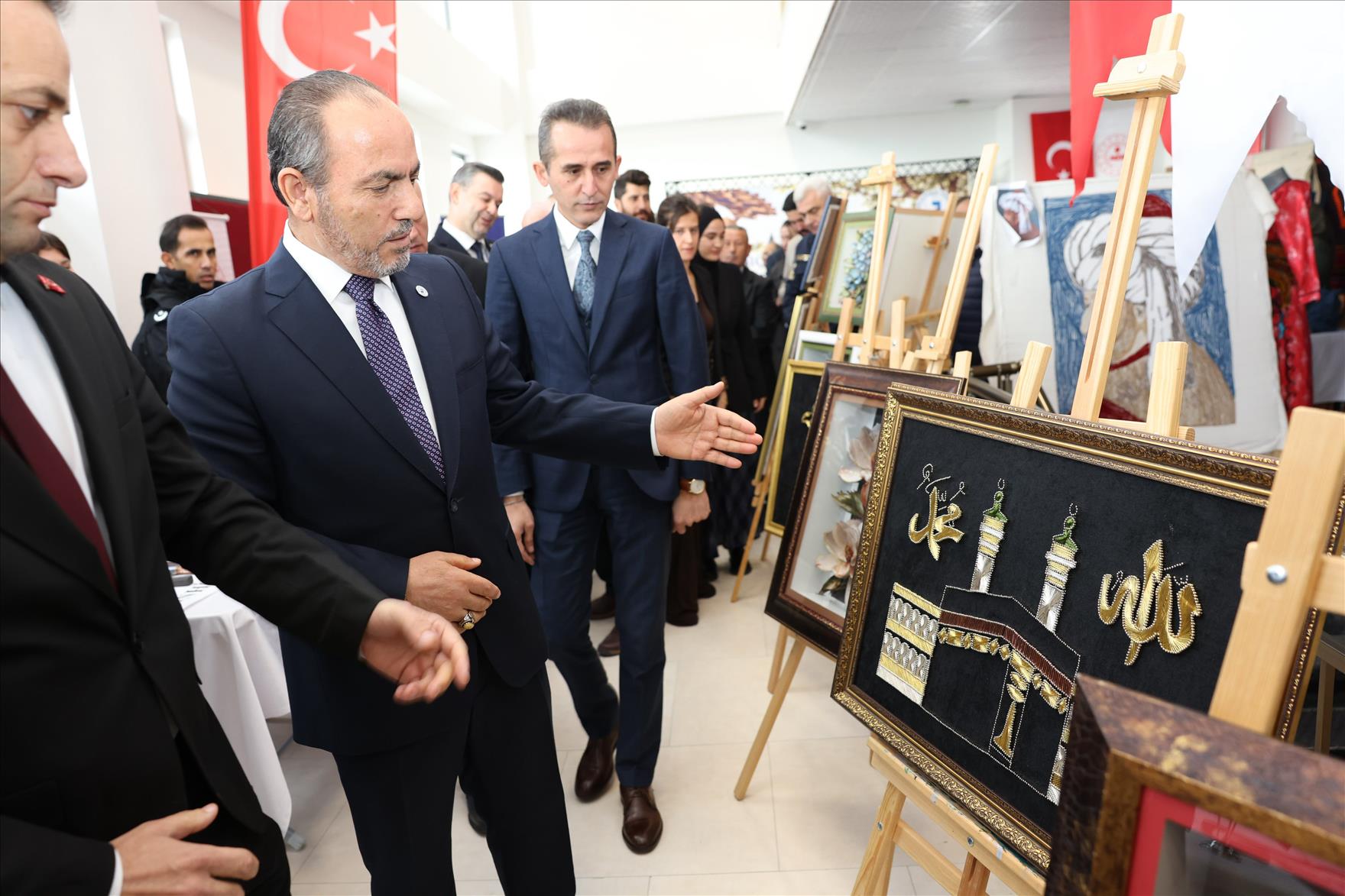
Yatağan, a neighbourhood in the Serinhisar district of Denizli, is one of Anatolia’s long-established centres of blacksmithing, knife-making and sword production, with a historical manufacturing culture. The Yatağan sabres, knives and hand tools associated with the region are not merely tools designed to meet everyday needs; they are also important representations of craftsmanship, artisanal skills and cultural identity passed down from generation to generation. Shaped by the traditional culture of blacksmithing, this production tradition encompasses a substantial body of cultural and technical knowledge through the materials used, metalworking techniques, craftsmanship skills and distinctive production methods. Documenting this knowledge, examining it through scientific methods and developing it with contemporary technologies are essential to passing traditional crafts on to future generations.
In this context, the 1st Symposium on Knife-Making and Hand Tools Technology and Culture (PAU BEATS’26), hosted by Pamukkale University under the theme “A Sharp Vision from Tradition to the Future”, brought together Anatolia’s centuries-old knowledge of blacksmithing and knife-making with academic studies from various disciplines, including history, archaeology, engineering, materials science, gastronomy and production technologies. The symposium provided an important academic platform for re-evaluating traditional crafts in the light of scientific knowledge and technological developments.
Rector Güngör: “The knowledge and experience passed down from masters to younger generations are an important part of our cultural heritage”
The opening ceremony of the symposium was held by Pamukkale University Rector Prof. Dr. Mahmud Güngör. Speaking at the opening programme, which brought together academics, industry representatives and master craftspeople, Rector Prof. Dr. Güngör emphasised the importance of bringing Serinhisar’s long-established knife-making tradition together with scientific knowledge and modern production technologies. Noting that the knowledge and experience passed down from masters to younger generations are an important part of our cultural heritage, Rector Güngör stated: “When the experience accumulated at a master's workbench meets the knowledge generated by a scientist in the laboratory, a great force emerges that will add value to our country's future.” He also highlighted the need for universities to integrate their scientific knowledge with local production cultures. Continuing his speech, Rector Prof. Dr. Güngör encouraged young people not to give up researching, producing and experimenting with new methods.
Yatağan’s Historical Craft Heritage Examined from a Scientific Perspective
As part of the symposium’s opening programme, Prof. Dr. Turgut Tok delivered a presentation titled “Some Reflections on the Word Yatağan”. This was followed by a panel titled “The Yatağan Sword: History, Etymology and Cultural Heritage”, moderated by Prof. Dr. Turgut Tok. During the panel, Prof. Dr. Tarık Baykara, a faculty member of the Department of Mechanical Engineering at Doğuş University’s Faculty of Engineering and Natural Sciences; Prof. Dr. Tülay Metin, a faculty member of the Department of History at Pamukkale University’s Faculty of Humanities and Social Sciences; and swordsmith Ömer Altıntaş discussed the historical background of the Yatağan sword, the origins of the term and the cultural heritage dimension of traditional sword-making from different perspectives.
The symposium's paper sessions examined Yatağan knife-making not only in terms of traditional production methods but also from historical, economic, technological and industrial perspectives.
Papers addressing the economic and sectoral dimensions of traditional production were also among the prominent topics of the symposium. Research on the comparative brand value of the Yatağan brand in knife-making, the structural performance of Türkiye’s cutlery manufacturing industry and Denizli’s position in the sector, as well as the visibility of chef’s knives on online marketplaces, provided an opportunity to evaluate local craftsmanship in terms of branding, competition and digital commerce.
Craft Culture Sustained Through Gastronomy and Hands-on Training
The scientific event demonstrated that preserving Yatağan knife-making as a historical production tradition must also be supported by materials technologies, design, quality, branding and industrial production processes. It also brought the craft of knife-making together with practical applications. The ergonomic features of knives used in professional kitchens, cutting performance, food safety, steel selection and the effects of cutting techniques on food quality were included in the programme as shared areas of study between gastronomy and engineering. An examination of chefs’ perceptions of and intentions to use locally produced kitchen knives, using Yatağan knives as an example, also revealed the relationship between traditional production, user experience and consumer perceptions.
Academic content was complemented by practical activities through gastronomy competitions and workshops held as part of the symposium. In addition to competitions in dicing onions, fine slicing, peeling tomatoes and chopping lettuce, workshops on sushi preparation, fruit and vegetable decoration, basic French cutting techniques, and knife anatomy and maintenance highlighted the use of the knife-making tradition across different professional fields and its importance in practical training.
Academic Contribution from PAU to Preserving Traditional Crafts
The Council of Higher Education’s efforts to improve vocational and technical education, expand practical training opportunities and preserve traditional professions have made it increasingly important for universities to support regional craftsmanship through academic studies. In this context, the symposium organised by Pamukkale University brought Denizli’s historical and cultural heritage together with academic research, demonstrating the university’s contribution to this field. The symposium marked an important step towards preserving traditional production culture, developing professional knowledge and skills, and evaluating local production alongside scientific research.
With the 1st Symposium on Knife-Making and Hand Tools Technology and Culture, organised for the first time in Türkiye, Pamukkale University made a significant contribution by bringing the historical heritage of traditional crafts together with academic research and supporting the knowledge and experience in this field through education, technology and production processes.
For detailed information about the symposium, please visit www.pau.edu.tr/beats/tr.