
The 27th Çivril International Apple Agriculture and Culture Festival Hosted the Exhibition of a PAU Academic
The 27th Çivril International Apple Agriculture and Culture Festival, held this year in Denizli’s Çivril district, made a name for itself not only in agriculture and production but also in art and culture. Prof. Dr. Ayşegül Koyuncu Okca, Head of the Department of Handicrafts at Pamukkale University (PAU), presented her works created using weaving and knitting techniques in her personal exhibition titled “The Spirit of Cotton.”
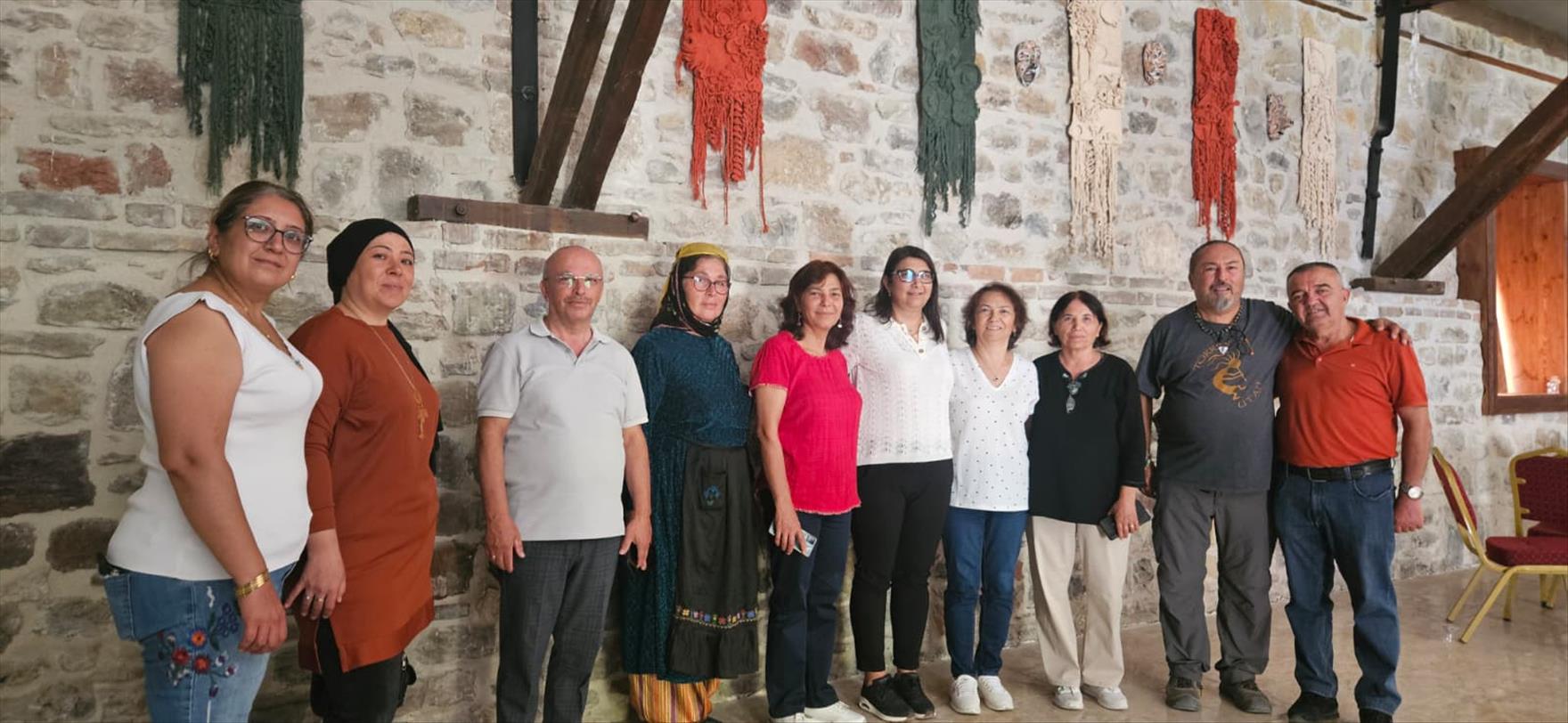
One of the most notable events of the festival was the conference on “The Use of Apples in Art,” held on Saturday, September 13, at the Railway Station Building Meeting Hall.
Traces of the Apple from Ancient Times to Today
Among the speakers at the conference were Archaeologist Okan Özalp, known as the “Rising Star of Archaeology” for his work ranging from ancient excavations to community-based cultural projects, and Art Consultant Özbilen Gökgöl, known for combining Anatolian Neolithic forms with Native American symbols in his unique designs. The event was moderated by Prof. Dr. Ayşegül Koyuncu Okca, Head of the Department of Handicrafts at PAU.
In a special video presentation, Archaeologist Okan Özalp conveyed the symbolic and mythological meanings of apples in Ancient Greek and Roman culture. The information, based on primary sources written by ancient authors, was reconstructed through storytelling and enriched with AI-supported visuals. This approach made academic knowledge more understandable and engaging for the audience. Özalp stated, “Even a fruit can be part of art and mythology throughout the ages. This is the best proof that culture is essentially the common language of humanity.”
An Artistic Bridge from Anatolia to the World
Art Consultant Özbilen Gökgöl presented examples of his work integrating Anatolia’s unique cultural richness with the universal language of art. Gökgöl said, “Anatolian culture is a heritage without equal in the world. As artists, we should pass this heritage on to the future by combining it with universal values without diminishing it.”
Prof. Dr. Ayşegül Koyuncu Okca, originally from Çivril and the event moderator, emphasized the importance of the conference: “Art is a common language that best expresses the spirit of a society, its past, and its hopes for the future. This event will contribute to the cultural life of our district and will once again remind us of how art strengthens our social unity.” She also noted that the event would inspire many new projects in the future and promised to support efforts to host international events in the coming years.
The conference highlighted the intersection of agricultural production and art, in line with the spirit of the festival. At the end of the event, participants gained a new perspective on how not only Çivril’s but also Anatolia’s cultural heritage can be integrated with universal values.
The Festival Hosted Three Artists on Three Different Themes
Prof. Dr. Ayşegül Koyuncu Okca, Head of the Department of Handicrafts at PAU and native of Çivril, presented her solo exhibition titled “The Spirit of Cotton,” showcasing works created with weaving and knitting techniques.
Özbilen Gökgöl, who has held various exhibitions internationally, presented his solo exhibition titled “The Spirit of Clay,” combining techniques from Anatolian lands with methods he learned during his education in the United States.
The third solo exhibition at the festival belonged to Prof. Dr. Ayşegül Koyuncu Okca’s five-year-old son, Mehmet Ege Okca. Starting sand painting techniques at the age of three, his works managed to attract the admiration of young visitors.