
Rector Güngör’s Message of Congratulations on September 27 World Tourism Day
Rector of Pamukkale University (PAU) Prof. Dr. Mahmud Güngör issued a message on the occasion of September 27 World Tourism Day. Rector Güngör emphasized that Pamukkale University has also translated its contributions to the field of tourism into concrete initiatives in the areas of local development and destination planning.
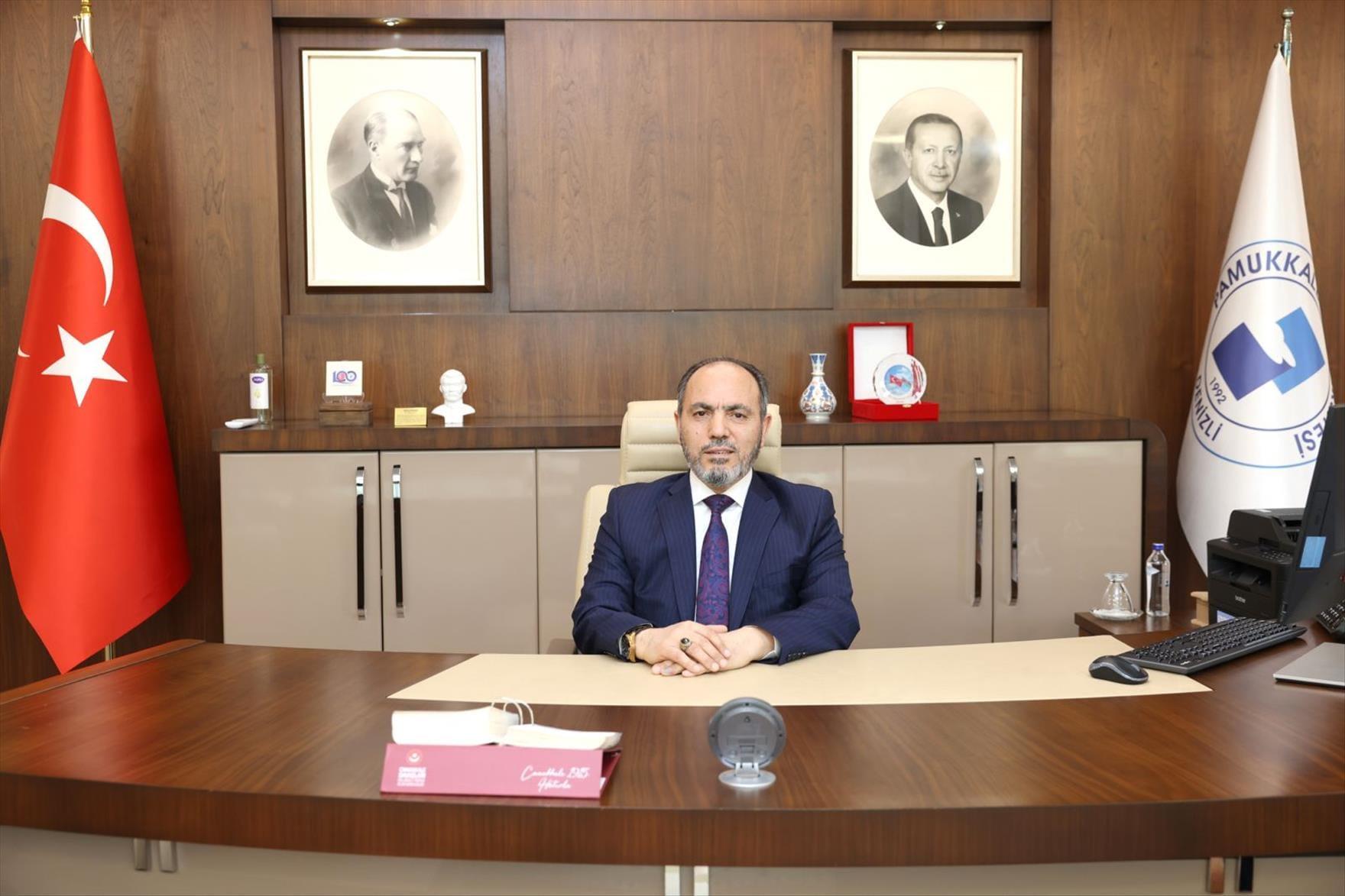
In his message, Rector Prof. Dr. Mahmud Güngör stated:
“Tourism is an important field that brings different cultures together, strengthens friendship and mutual understanding among societies, and transforms natural and cultural values into a shared wealth. In addition to its contributions to economic development and employment, it also carries an important responsibility in terms of preserving the common heritage of humanity and passing it on to future generations. September 27 World Tourism Day is a meaningful opportunity to remember this multifaceted value of tourism and to shape its future through a shared understanding.
The theme of the 2026 World Tourism Day, which focuses on redesigning tourism through digitalization and artificial intelligence, highlights the importance of scientific knowledge and technological innovations in the future of tourism. As Pamukkale University, we attach importance to addressing artificial intelligence and digitalization from a human-centered perspective and to developing innovative studies in different areas, from tourism education to the promotion of cultural heritage, and from visitor experiences to sustainable destination management.
In line with our responsibility for education, research, and contributing to society, we regard contributing to the development of our city and country in the field of tourism as one of our fundamental goals. We bring together our academic expertise across different disciplines, particularly at our Faculty of Tourism, with innovative studies in areas such as culture, gastronomy, health, and thermal tourism. In addition to professional knowledge and skills, we aim to educate our students as individuals who are committed to ethical values, environmentally conscious, respectful of cultural heritage, and capable of adapting to a changing world.
Concrete examples of this approach are the studies we have carried out within our university under TÜBİTAK, ERASMUS, and BAP (Scientific Research Projects). Through our projects, we have conducted studies aimed at promoting our cultural values and developing digital applications in tourism. We have also considered our Denizli Digital Tourism Maps studies as an important part of our approach to making the tourism values of our city visible in the digital environment.
Through our projects on the use of artificial intelligence in tourism, we have brought into our research agenda the factors affecting the intention to use chatbots and their effects on destination selection. We have conducted scientific studies on the development of an artificial intelligence chatbot for Denizli tourism under the name MAYZ Mirasımızı Aktaran Yapay Zekâ (https://www.mayztourism.com/). Through these studies, we aim to consider technology as a tool that can contribute to the promotion of our cultural heritage and visitors’ access to information. With our project “Branding Denizli Cuisine within the Scope of Gastronomy Tourism: GastroMAYZ, a Chatbot Conveying Local Flavors,” we aim to contribute to the promotion of Denizli’s gastronomic values by addressing our local culinary culture through the axis of artificial intelligence and digitalization.
We have also translated our university’s contributions to tourism into concrete initiatives in the areas of local development and destination planning. We have carried out studies within the scope of the Denizli Tourism Roadmap (2026–2030) and the Çameli Cittaslow Tourism Roadmap Workshop. We brought our local values to the academic agenda by sharing our research on Çameli’s tourism roadmap and action plans, as well as on sky observation events at Beyağaç Topuklu Plateau, at scientific meetings. We also considered the Best Tourism Villages application for Elmalı-Çameli and the Tripolium GastroBahçe studies among our areas of work aimed at strengthening the connection between rural tourism, local production, and gastronomy. Through works such as “Thermal Tourism and Thermal City: Denizli,” “Denizli Tourism Roadmap,” “Gastronomy and Tourism: Technology, Artificial Intelligence and Digitalization in Gastronomy and Gastronomy Tourism,” “Geographical Indication and Gastronomy Museums,” and “Health Tourism, Thermal Rehabilitation Centers and Digitalization,” we have contributed to the body of knowledge in the field of tourism. Through our publications on digital tourism maps and artificial intelligence chatbots in gastronomy tourism, we have also reflected technological transformation in our academic studies.
With the Sustainable Thermal Tourism Congress, the 5th National Tourism Guidance Congress, the International Gastronomy Tourism Congress, and the 23rd National Tourism Congress that we organized, we created platforms for scientific exchange in different areas of tourism. We supported academic cooperation and intercultural interaction through international scientific events themed around the Turkic World, the Silk Road, and Cultural Heritage. The International Symposium on Cultural Heritage and Its Transmission in the Turkic World was also one of the important gatherings we organized in this direction.
We have also attached importance to integrating our academic studies with practice and social participation. We conducted activities aimed at promoting our culinary culture through events such as the Denizli Flavor Festivals, Gastronomy Competitions, the Turkish Cuisine Cooking Competition, and the Denizli Local Cuisine Competition. Through our Faculty of Tourism’s Labada Gourmet Practice Kitchen and our gastronomy events, we demonstrated the importance we attach to practical education. We organized career days and career meetings in tourism to support the professional development of our students.
The future of tourism will be strengthened through an approach in which natural resources are protected, local cultures are kept alive, services are accessible to everyone, and economic benefits reach different segments of society. We believe that the opportunities offered by digitalization and artificial intelligence should also be utilized in service of this approach. As our university, we will continue to transform our scientific knowledge into social benefit, bring our local values together with universal knowledge, and contribute to the sustainable future of tourism.
With these thoughts, I celebrate September 27 World Tourism Day of all employees in the tourism sector, entrepreneurs, public institutions and civil society organizations, our academics, and our students who are the tourism professionals of the future. I would like to thank our academic and administrative staff, our students, and all our stakeholders with whom we cooperate for their contributions to our university’s work in the field of tourism, and I wish for a future of tourism that respects nature, brings cultures closer together, uses technology for the benefit of humanity, and enhances social welfare.”