
Mass in the Colon Removed Without Surgery at PAU Hospitals
A giant mass measuring approximately 17 centimeters detected in the colon was successfully removed in one piece without the need for surgery using an advanced endoscopic method by Prof. Dr. Ufuk Kutluana, a faculty member of the Gastroenterology Division, Department of Internal Medicine at Pamukkale University (PAU) Hospitals.
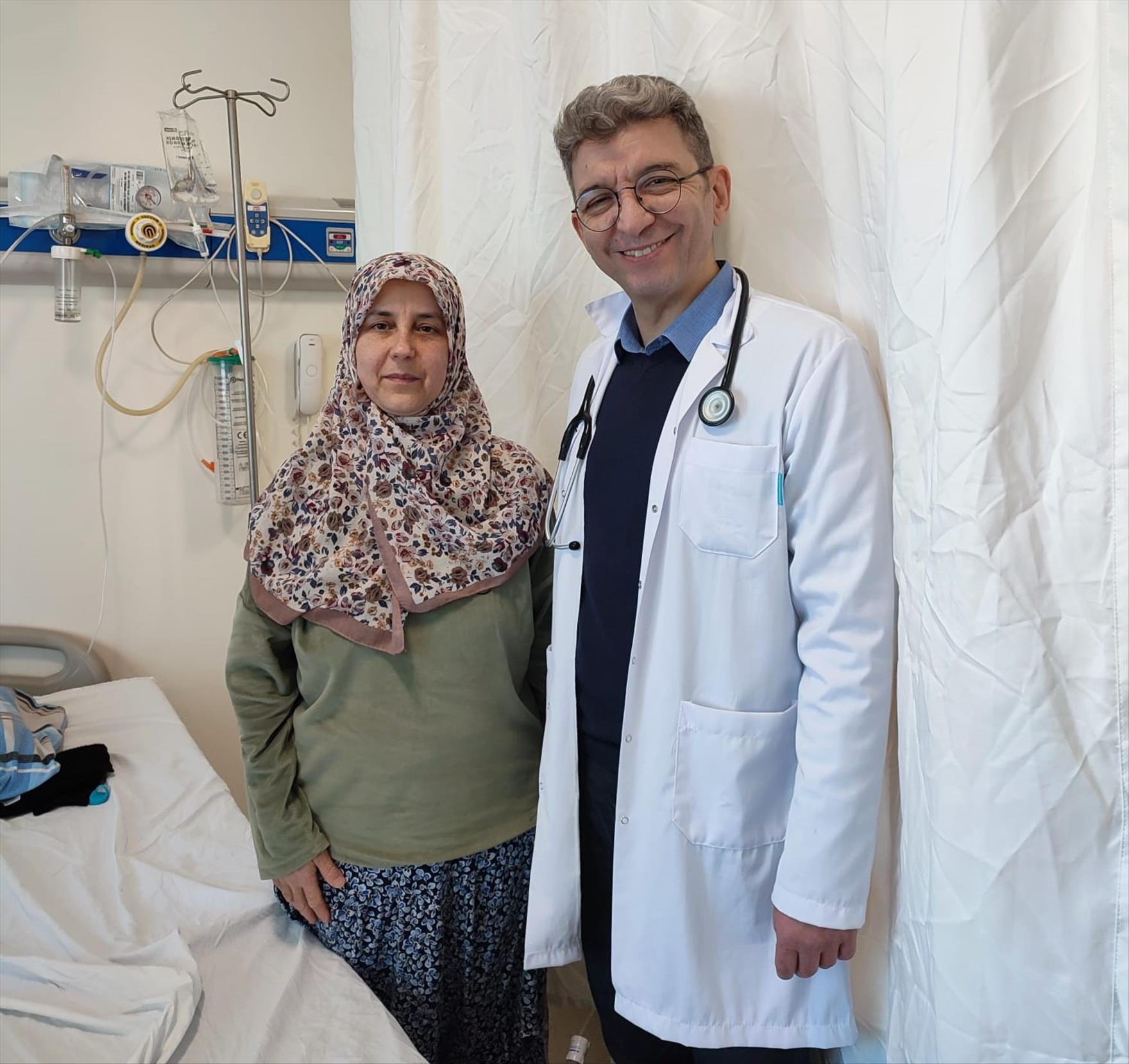
Making statements about the successful procedure, Prof. Dr. Ufuk Kutluana noted that the approximately 17-centimeter mass detected in the colon was removed in one piece without surgery using an advanced endoscopic method, adding that lesions of this size in the colon generally require surgical intervention. He continued: “During the colonoscopy (camera-assisted intestinal examination) we performed on our patient referred to us from another center, we encountered a lesion located very close to the rectal outlet, starting at a distance of approximately 3 centimeters and involving a segment of about 17 centimeters, affecting more than half of the intestinal lumen. This lesion is a type of tumor referred to in the literature as a ‘lateral spreading tumor (LST),’ which can expand along the surface. A size of 17 centimeters is quite advanced in terms of endoscopic treatment and is considered beyond standard ESD applications. Although the lesion was large, it did not show features of deep invasion. An open surgical intervention in this region would have been much more traumatic and could have resulted in a permanent colostomy, that is, the necessity of an intestinal bag for the patient. Therefore, we initiated the endoscopic submucosal dissection (ESD) procedure. We treated the giant lesion, which had a linear dimension of 16–17 centimeters and macroscopically resembled the Turkish Republic of Northern Cyprus, by removing it in one piece. Although it was a somewhat long and demanding procedure, it was very gratifying for us. In this way, while preserving the integrity of the patient’s intestines, major surgical incisions associated with conventional surgery, the possibility of a stoma (diversion of the intestine to the abdominal wall to collect stool in a bag), and a long recovery period were all avoided. No complications (undesired side effects) such as bleeding or perforation developed after the procedure. We started oral feeding for our patient the same evening, and after monitoring in the hospital for 1–2 days for observation, the patient was discharged. It should also be remembered that most colorectal cancers develop from polyps and similar lesions detected at an early stage. Therefore, regular colonoscopy screening is of vital importance, especially for individuals over the age of 50.”