
Statement from PAU Hospitals on World Radiology Day, November 8: Radiology Is Where Scientific Knowledge Touches Human Lives
Prof. Dr. Nuran Sabir Akkoyunlu, Head of the Department of Radiology at Pamukkale University (PAU) Hospitals, made a statement on the occasion of World Radiology Day, November 8.
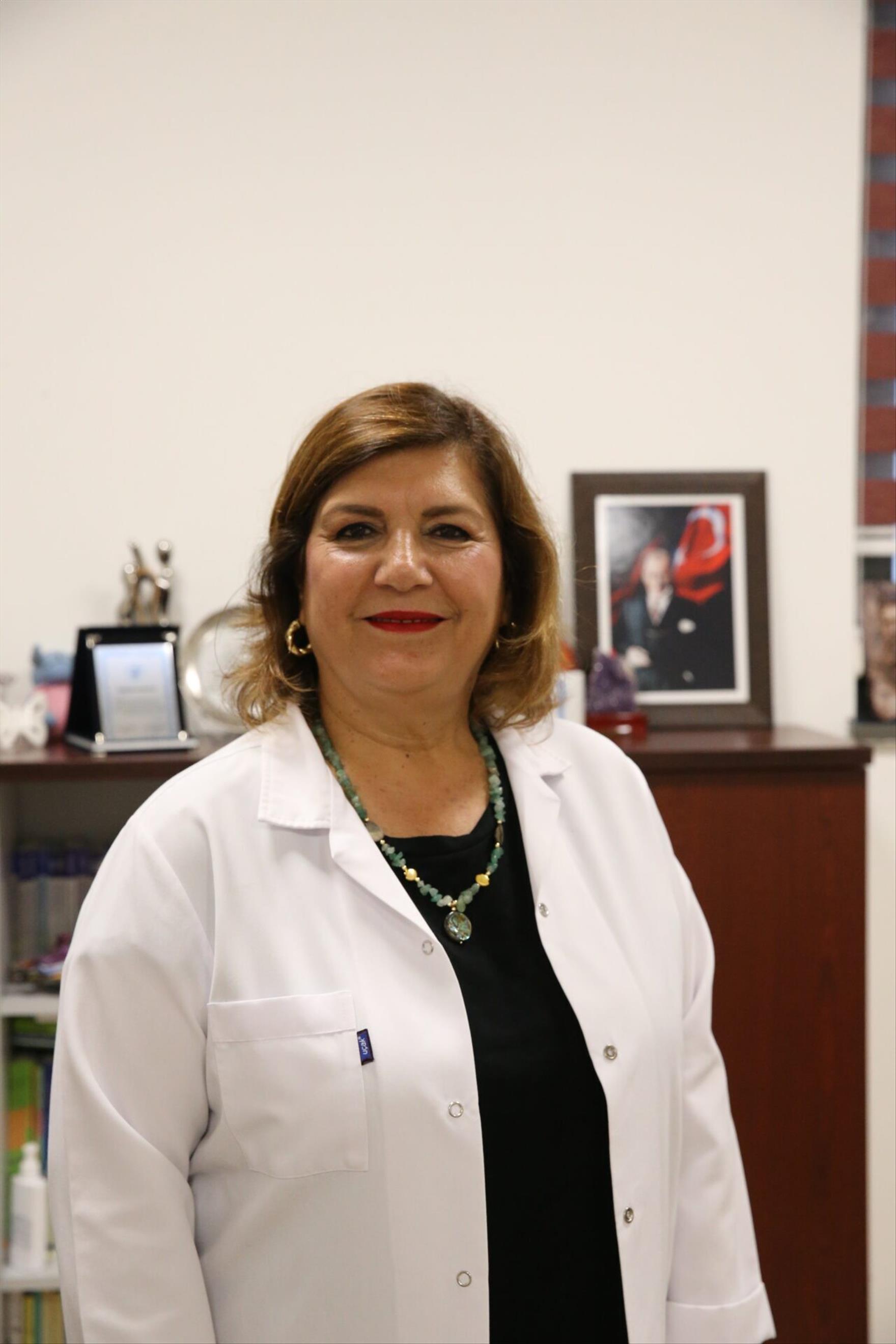
In her statement, Prof. Dr. Nuran Sabir Akkoyunlu, a faculty member of the Department of Radiology at PAU Hospitals, said:
“Radiology is one of the indispensable fields of modern medicine, not only because of technological advances but also because of the value it brings to human life. Medicine is the endeavour to protect and restore health, the most precious treasure of human life. Within this great endeavour, radiology is a unique field of expertise that enables us to understand changes hidden deep within the human body, detect signs of disease at their earliest stages and turn uncertainties into scientific knowledge.
Reaching a diagnosis can sometimes be like putting together the pieces of a complex puzzle. While the patient's medical history, clinical findings and laboratory results form different pieces of this puzzle, radiological examinations often complete the missing piece. Sometimes, noticing a small detail or correctly interpreting a subtle change in an image can transform the entire course of a patient's treatment. The true value of radiology lies not only in revealing what cannot be seen with the naked eye, but also in accurately interpreting the information obtained, replacing uncertainty with knowledge and anxiety with hope.
Today, radiology has taken on responsibilities that extend far beyond identifying diseases. It serves human health across a wide range of areas, from early diagnosis and treatment planning to evaluating disease progression and providing direct treatment through interventional procedures. In particular, the ability of interventional radiology to treat certain conditions that once required major surgical interventions through less invasive methods is one of the most tangible examples of how scientific progress translates into benefits for our patients' lives.
Science and technology enable us to examine the human body in greater detail with each passing day. Artificial intelligence, advanced imaging techniques and digital systems are expanding the boundaries of radiology and opening up new horizons for us. However, one thing remains unchanged amid all these developments: even the most advanced technology achieves its true value when combined with human knowledge, experience and judgement.
A radiological image is not merely a cross-section consisting of different densities and signal characteristics in the eyes of the physician interpreting it. That image carries the responsibility of a clinical question awaiting the right answer, an important decision that needs to be made and a person seeking healing. For this reason, radiology is a scientific discipline that requires attention, patience, discipline and continuous learning, as well as technical competence. A millimetric detail noticed in an image can sometimes make an immeasurably significant difference in a person's life.”
“We Work Guided by Science and Driven by Our Responsibility to People”
Referring to the healthcare services, educational activities and scientific research conducted by the Department of Radiology, Prof. Dr. Nuran Sabir Akkoyunlu continued her statement as follows:
“As the Department of Radiology at Pamukkale University Faculty of Medicine, we aim to provide our patients with the highest-quality healthcare by bringing together developing technologies, scientific knowledge and clinical experience. Alongside our work in diagnostic and interventional radiology, we carry the responsibility of training the specialist physicians of the future and contributing to scientific knowledge.
This great responsibility can only be fulfilled through the efforts of a strong team united around a common purpose. Our faculty members, research assistants, radiology technologists and technicians, and all our colleagues serve human health with the same dedication every day.
For us, the most meaningful reward of our profession is not simply a successful examination or an accurate report. It is being able to make a difference in a patient's life through a timely diagnosis, appropriately guided treatment and the patient's recovery.
The discovery made by Wilhelm Conrad Röntgen on November 8, 1895, fundamentally changed humanity's understanding of medicine. Over the past 131 years, this scientific legacy has grown through the efforts of countless researchers, physicians and healthcare professionals and has reached the present day. We, too, take pride in and feel responsible for carrying this legacy into the future.
With the hope of touching many more lives by remaining guided by science and always keeping people at the centre of our work, I extend my congratulations to all my colleagues and radiology professionals on World Radiology Day, November 8.”