
Rector Güngör: “For the First Time in Türkiye, Turtles to Be Tracked with a Domestic Satellite Device Returned to Their Natural Habitat”
Muğla’s world-renowned İztuzu Beach witnessed a historic moment for both science and nature. Pamukkale University Rector Prof. Dr. Mahmud Güngör released seven sea turtles, whose treatment had been completed at Pamukkale University’s Sea Turtle Research, Rescue and Rehabilitation Center (DEKAMER), back into the blue waters in a ceremony held at İztuzu Beach.
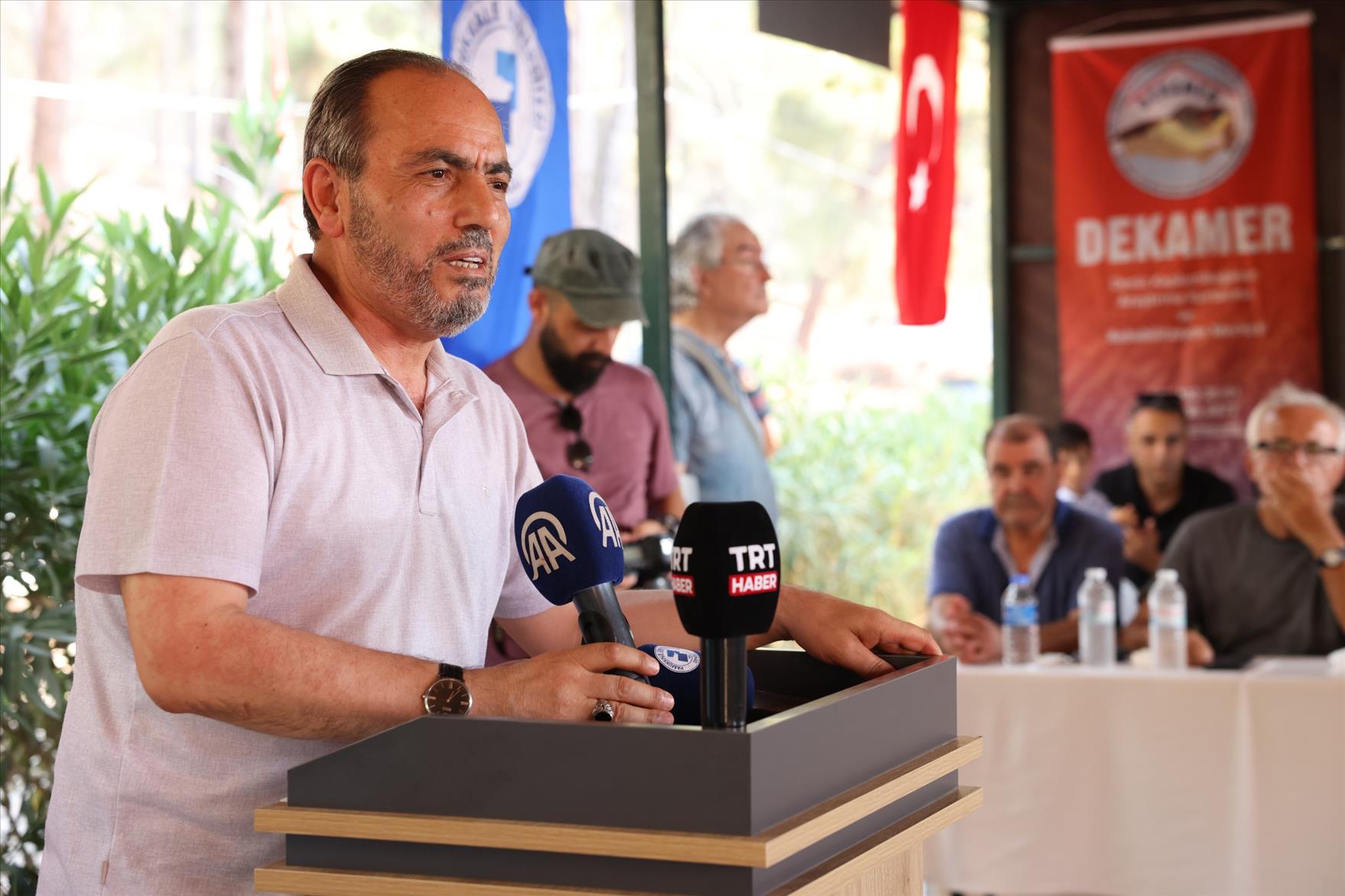
The event at İztuzu Beach was attended by Muğla Governor Dr. İdris Akbıyık, Pamukkale University Rector Prof. Dr. Mahmud Güngör, Muğla Sıtkı Koçman University Rector Prof. Dr. Turhan Kaçar, Dokuz Eylül University Acting Rector Prof. Dr. Hamdi Şükür Kılıç, Ortaca District Governor Kenan Aktaş, Mayor Evren Tezcan, protocol members, representatives of non-governmental organizations, international guests, and numerous invitees. Each of the turtles, which will be tracked for the first time in Türkiye with a domestically produced satellite tracking device, returned to their natural habitat with a unique story.
Migration Routes to Be Monitored with Domestic Technology
Thanks to satellite tracking devices developed by Plan-S, the migration routes, habitats, and behaviors of sea turtles in different ecosystems will be monitored over the long term. In this way, important scientific data will be obtained for species conservation and ecosystem management.
Rector Prof. Dr. Mahmud Güngör: “We will continue our efforts to protect nature and preserve the values of the Blue Homeland.”
Sharing his thoughts on the event, Rector Prof. Dr. Mahmud Güngör said:
“Today, for the first time, we attached a domestically developed device, produced by Planes and improved here after prototype testing, to a sea turtle. For the first time in Türkiye, turtles to be tracked with a domestic satellite device have returned to their natural habitat. In this regard, we aimed to ensure both the safety of the developed device and the future of our sea turtles. Many turtles can be tracked in this way. We will also conduct studies to determine the exact locations of sea turtle conservation areas, and to identify which regions of the sea are most important for turtles. While we know about nesting and the state of the beaches, unfortunately, we do not know precisely where and how frequently turtles are found in the Mediterranean. As we increase the number of turtles being tracked, we believe that these studies will help identify valuable areas within our Blue Homeland, which is of great importance to our country.
For example, our turtle named Tuğba was treated here six years ago and released into the sea, traveling as far as the Adriatic. This year, she returned to our center for treatment. We placed a new device on her and released her back into the sea today. This year, 23 turtles have been treated; 4 were released earlier, and 7 were released today. By the end of the year, we aim to return another 13–14 turtles to their natural environment. We will make more effective use of the center’s 17 years of experience. The excitement of children sending the little turtles to the sea today added a special enthusiasm to the event. I extend my thanks to all our academics and everyone who contributed both to the development of the domestic device and to the care and treatment of the turtles.”