
Psychological Resilience Project in Early Childhood Successfully Completed with the Motto “Think, Try, Grow Stronger”
The project titled “Psychological Resilience Through Problem-Solving-Based Activities,” carried out under the leadership of Pamukkale University (PAU) Faculty of Education, in cooperation with the Buldan District Directorate of National Education and hosted by Yenicekent Atatürk Primary School, was completed between 7 and 9 October.
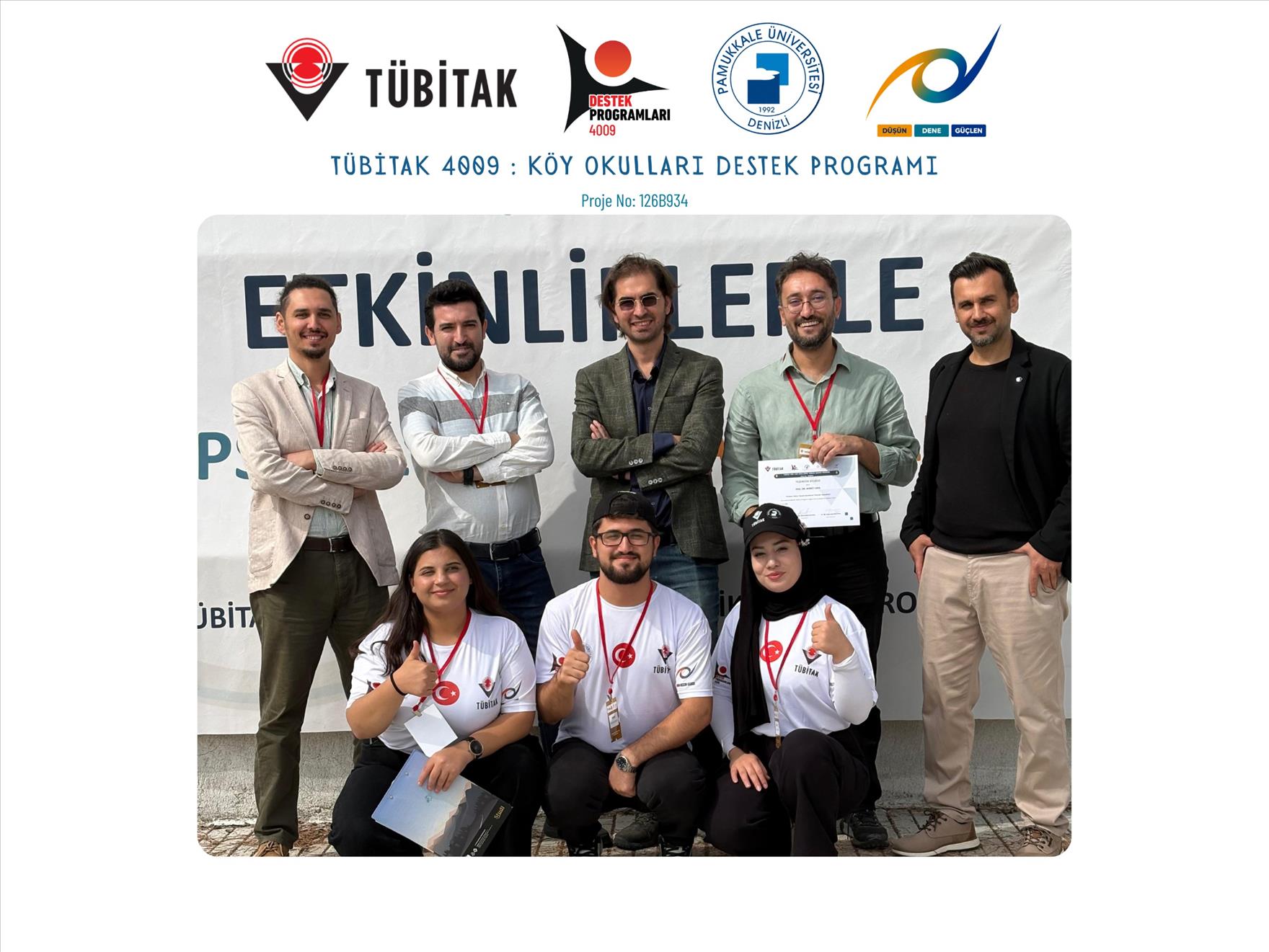
The project, supported under the TÜBİTAK 4009 Support Program for Rural Schools, aimed to make problem-solving-based psychological resilience education more widely available at the early childhood level in rural schools, raise parental awareness, and make a tangible contribution to strengthening university–village school collaboration. The project was led by Assistant Professor Abdullah Atan. Children attending the kindergarten class at Yenicekent Atatürk Primary School, along with their parents, participated in the three-day project. The project aimed to support the capacities of young children in rural areas in problem-solving, perseverance, trying again, asking for and accepting help, cooperation, emotional regulation, and psychological resilience. Throughout the program, psychological resilience was addressed not merely as a theoretical concept but as a practical and multidimensional learning process that enables children to overcome cognitive, physical, and social challenges. The motto “Think, Try, Grow Stronger,” which formed the foundation of the project, emphasized children's ability to analyse the problems they encounter, take action, and develop emotional resilience by learning from their mistakes.
During the program, the young participants took part in STEM activities, outdoor and forest pedagogy practices, engineering design processes, unplugged coding activities, and a science talk organized for the local community. On the first day, during the activities titled “Water: The Essential Source of Life” and “A Carrot Transport Package for Peter Rabbit,” conducted under the guidance of Associate Professor Ahmet Erol, the children designed practical problem-solving setups focusing on the fluidity of water, load distribution, and material durability. On the second day, in the workshops titled “Oh No, We Can't Get Past the Log!” and “Can We Build a Shelter That Looks Like an Animal's Home?”, led by Associate Professor Kudret Aykırı, the children gained experience in cooperation, benefiting from peer and adult support on outdoor adventure and balance courses, and building shelters using natural materials. On the third day, the “Egg Drop Engineering Project,” conducted by Assistant Professor Aytaç Karakaş, involved testing gravity and impact absorption, while the unplugged coding activity titled “Returning Home After the Rain: The Little Hedgehog's Coding Path,” led by Assistant Professor Abdullah Atan, focused on algorithmic thinking and developing alternative routes. As part of the program, Associate Professor Emel Tok also held an interactive science talk for the local community on “Supporting Psychological Resilience in Early Childhood,” addressing the supportive roles families play in child development.
By combining theoretical foundations with practical activities, the project enabled children to experience the motto “Think, Try, Grow Stronger” firsthand in every workshop. They personally experienced key indicators of psychological resilience, such as persevering in the face of challenges without giving up, trying again when their first attempt was unsuccessful, asking for help when they encountered difficulties and accepting the help offered, and seeking alternative routes and solutions. The three-day program concluded with the presentation of certificates of participation to the students and a general evaluation session with school administrators and teachers.