
PAU’s “Are the Eyes the Mirror of the Heart?” Study Traces the Conflict Between the Desire for Closeness and the Desire for Solitude Through Gaze Patterns
A study conducted at Pamukkale University (PAU) has revealed that secure and fearful attachment styles may differ not only in relational attitudes but also in eye movements and patterns of attention. The PAU Attachment-Related Emotional Image Battery, developed as part of the study, was introduced to the scientific literature, while the study was published in the international psychology journal Current Psychology.
“Eyes are the mirror of the heart; they know nothing of lies…” Although it may not be possible to speak with the same certainty as the poem does, research conducted at PAU suggests that some internal conflicts experienced in close relationships may also be reflected in where we look. The study was conducted by Associate Professor Dr. Turgut Türkdoğan, Research Assistant Funda Bekil, Research Assistant Dr. Ayşe Cansu Bilgen, Assistant Professor Dr. Tolga Coşguner, and Associate Professor Dr. Ceren Tekin Karagöz from Pamukkale University. First, the attachment characteristics of 699 university students were assessed. Subsequently, the gaze patterns of 63 participants with pronounced secure or fearful attachment characteristics when viewing emotional and relational images were examined using eye-tracking technology.
One of the main findings of the study was that attachment-specific tendencies toward approaching and withdrawing could also be observed in attentional processes. Participants with secure attachment were more clearly drawn to images representing closeness and emotional support, whereas among those with fearful attachment characteristics, images representing closeness and being alone attracted attention to a roughly equal degree. This result suggests that the approach–avoidance conflict underlying fearful attachment may also be reflected at the level of attention. Put into everyday language, the picture might perhaps be summarized as follows: “Being alone attracts my attention just as much as being close!” The desire for closeness does not disappear; the desire for solitude continues to coexist with it.
Differences were also observed in attentional responses to stress-related stimuli. Participants with fearful attachment characteristics displayed a more avoidant attentional pattern, particularly in response to scenes involving self-evaluation and the threat of failure, whereas securely attached participants were able to maintain cognitive engagement with stressful stimuli for longer periods. These findings therefore open the door to new research questions concerning not only interpersonal closeness and withdrawal in fearful attachment, but also the relationship between self-evaluation and the threat of failure and attentional processes.
A New Scientific Material Bearing the PAU Name
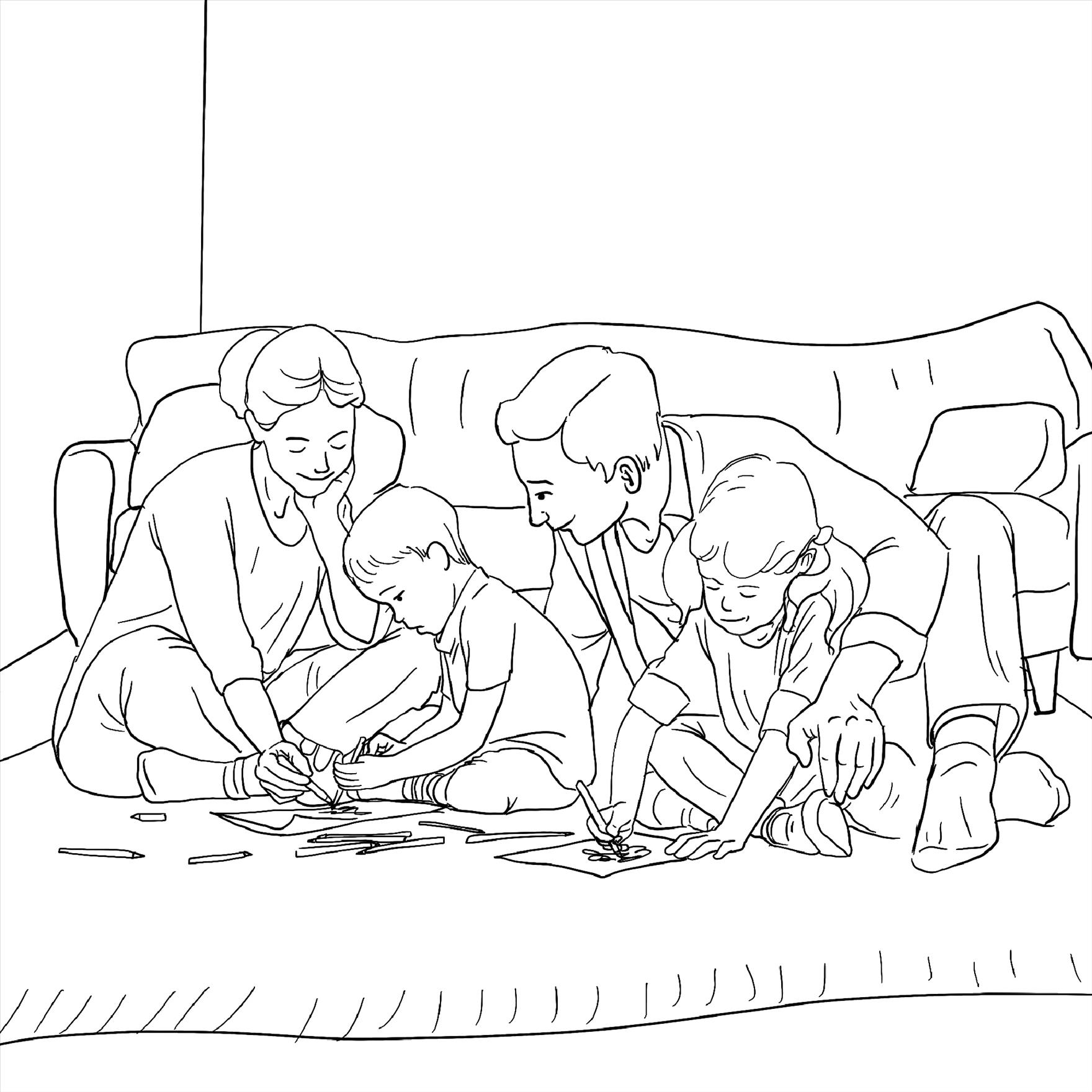
One of the important outcomes of the study was the “PAU Attachment-Related Emotional Image Battery” developed for the research. The battery consists of original illustrations depicting closeness, the desire for solitude, emotional neutralization, and different attachment themes, and was developed through expert evaluations and pilot studies. Thus, the study not only produced new findings but also introduced an original scientific material to the literature for future studies examining attachment and attentional processes through eye-tracking. By giving the battery the name PAU, the aim is for this tool developed at Pamukkale University to be used in different studies in the future, receive citations, and increase the visibility of the University’s name in the international literature.
Tracing the Gaze in Relationships
The findings also bring to mind the patterns of intense closeness and sudden withdrawal frequently discussed in relationships today. The study does not directly examine behaviors such as “love bombing” or “ghosting.” However, the fact that closeness and solitude can attract attention simultaneously in fearful attachment opens the door to new research questions aimed at understanding the approach–avoidance dynamics observed in such patterns. The overall picture emerging from the study shows that differences in attachment styles can be examined not only through what we feel or how we behave in our relationships, but also through what we look at, what we avoid looking at, or where we sustain our attention. Perhaps a small scientific footnote can be added to that familiar saying: “The eyes are the mirror of the heart” belongs to poetry; however, our gaze may carry more clues than we think about our relationships and the internal conflicts we experience within ourselves.