
PAU Hospitals Strengthen the Culture of Patient Safety Together
Prof. Dr. Atakan Yılmaz, Quality Director of Pamukkale University (PAU) Hospitals, stated that patient safety is not merely a quality objective but a fundamental responsibility that must be embraced at every stage of healthcare delivery, and spoke about the efforts to continuously improve safe care processes.
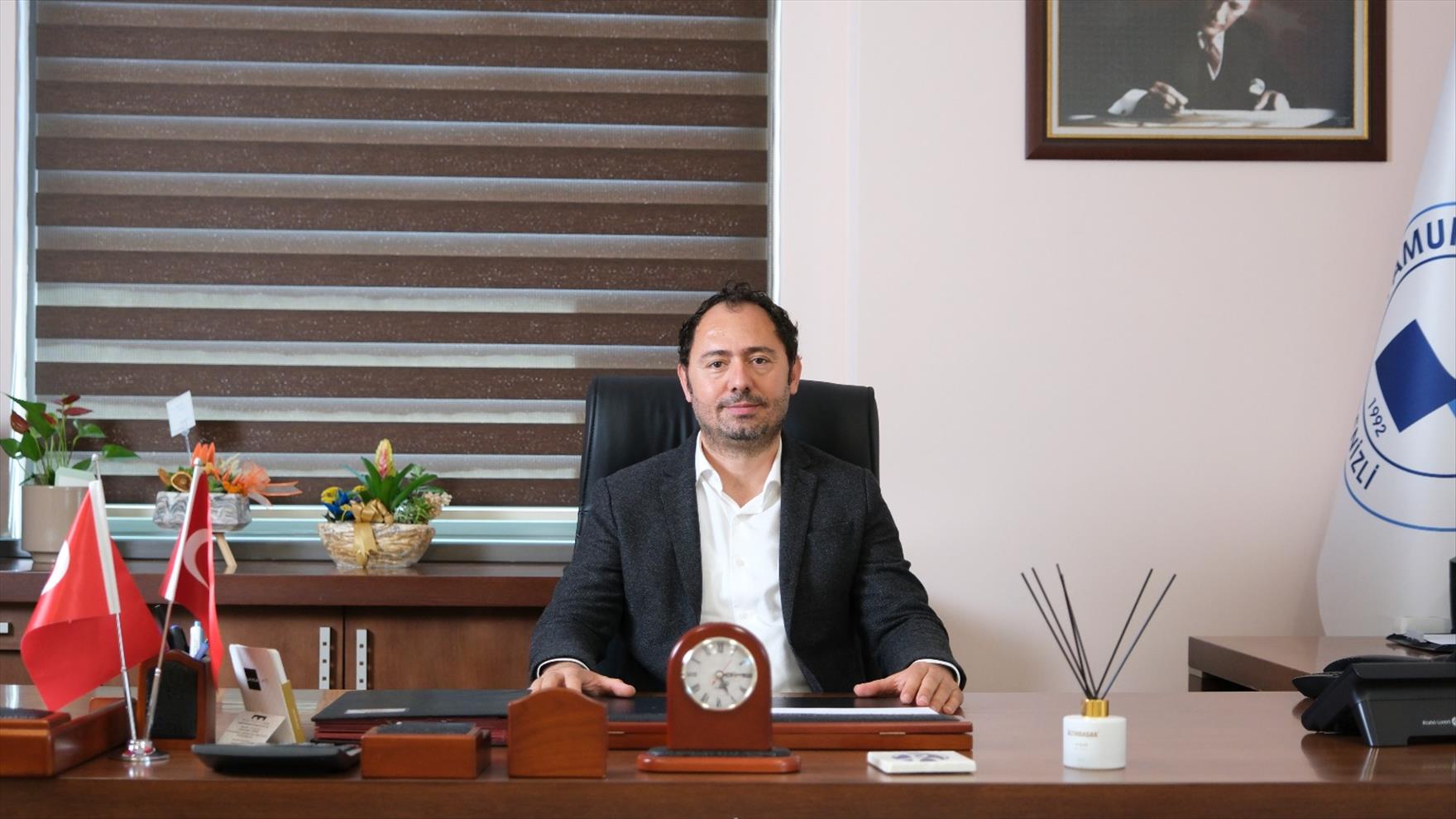
Prof. Dr. Atakan Yılmaz, Quality Director of PAU Hospitals, made the following statement:
“As Pamukkale University Hospitals, I regard patient safety as an integral and fundamental component of the healthcare services we provide. By adopting the organizational and service-oriented approach of the Healthcare Quality Standards and Healthcare Accreditation Standards, we consider providing safe, efficient, patient- and employee-centered, continuous, and sustainable healthcare services among our fundamental responsibilities. In line with this understanding, we regard creating a healthy and safe working environment, using our resources effectively, and ensuring the continuity of healthcare services as the fundamental building blocks of our institutional quality approach.
I do not consider patient safety merely as responding to an error that has occurred. For me, patient safety means identifying risks before they arise, analyzing them appropriately, taking the necessary measures, and continuously improving safe care processes. We know that healthcare services constitute a high-risk structure in which numerous healthcare professionals, different units, technological systems, medications, medical devices, and complex processes that follow one another are carried out simultaneously. Therefore, we identify, assess, and manage foreseeable risks at every stage from the moment a patient applies to our healthcare institution until discharge.
Through our patient safety practices, we primarily aim to prevent incidents that may cause harm to patients. We develop protective and preventive practices in areas of risk such as medication errors, errors that may occur during surgical procedures, patient falls, and healthcare-associated infections. For risks that cannot be completely eliminated, we effectively and coordinately implement emergency procedures such as Blue Code and Pink Code to minimize their effects. In addition, we do not regard near-miss incidents and adverse events merely as reports; rather, we consider them valuable learning opportunities for improving our system and preventing similar situations from recurring.”
Prof. Dr. Yılmaz: “Patient safety is our shared responsibility.”
Referring to the fact that the patient safety approach is maintained in accordance with international and national standards, Prof. Dr. Yılmaz stated that they have adopted the vision set out by the World Health Organization in its Global Patient Safety Action Plan 2021–2030, which envisages a healthcare system in which no one is harmed during the delivery of healthcare and every patient receives safe, effective, and respectful care anytime and anywhere. Prof. Dr. Yılmaz also stated that they continuously improve their practices in line with the Türkiye Healthcare Quality System and National Patient Safety Goals implemented by the Ministry of Health of the Republic of Türkiye, emphasizing that they have strengthened the integration of a patient safety culture into all processes of their institution.
Prof. Dr. Atakan Yılmaz stated: “We are aware that patient safety is not the responsibility of a single unit, a single manager, or only a particular professional group. Safe healthcare is possible through strong teamwork. Therefore, we attach importance to the active participation of all our colleagues involved at every stage of healthcare delivery, from our physicians and nurses to our health technicians and administrative staff. We strengthen multidisciplinary cooperation, continue our training and awareness-raising activities, analyze potential risks in processes together, and plan the necessary preventive actions.
We do not regard incident and error reports as a means of blaming or holding an individual responsible, but as valuable feedback that helps improve our system. We continue our efforts to standardize safe practices across all healthcare processes and to ensure that patients and their relatives actively participate in care processes.
One of the most important elements of our patient safety culture is also an understanding of a system that learns from errors and continuously improves. When an incident occurs, we do not focus solely on the question, ‘Who made the mistake?’ Rather, we focus on the questions, ‘What systemic conditions contributed to the occurrence of this incident, and what should we do to prevent the same situation from happening again?’ In line with this approach, we do not assess incident and error reports on the basis of individuals; instead, we examine communication processes, training needs, workflows, the working environment, environmental conditions, and technological factors as a whole. In this way, we learn from every incident, reassess our processes based on the information we obtain, and implement the necessary improvements.
I do not regard patient safety as an issue limited to the implementation of certain procedures. Patient safety is part of an institution’s working culture. I believe that, for safety to be sustainable, it is necessary to create a working environment where our employees can express themselves, report risks and errors without hesitation, and where learning and improvement are supported. Because I know that a strong patient safety culture is possible not only by preventing incidents but also by learning from every incident and making the system safer.
We anticipate risks, measure and monitor our processes, take patient and employee feedback into consideration, develop evidence-based practices, and firmly maintain our commitment to continuous improvement. Because for us, patient safety is not merely a quality objective but a fundamental responsibility that we fulfill every day. We work together, learn together, and improve together for safer healthcare. With this understanding, we strengthen our patient safety culture every day.”