
New Approach to Patient-Physician Communication at PAU Faculty of Medicine Based on Avicenna’s Holistic Approach to Medicine
At the Pamukkale University (PAU) Faculty of Medicine, patient education-centered practices are being emphasized to strengthen patient-physician communication in busy outpatient clinic settings and to ensure that patients acquire information about their treatment processes more accurately and retain it more effectively.
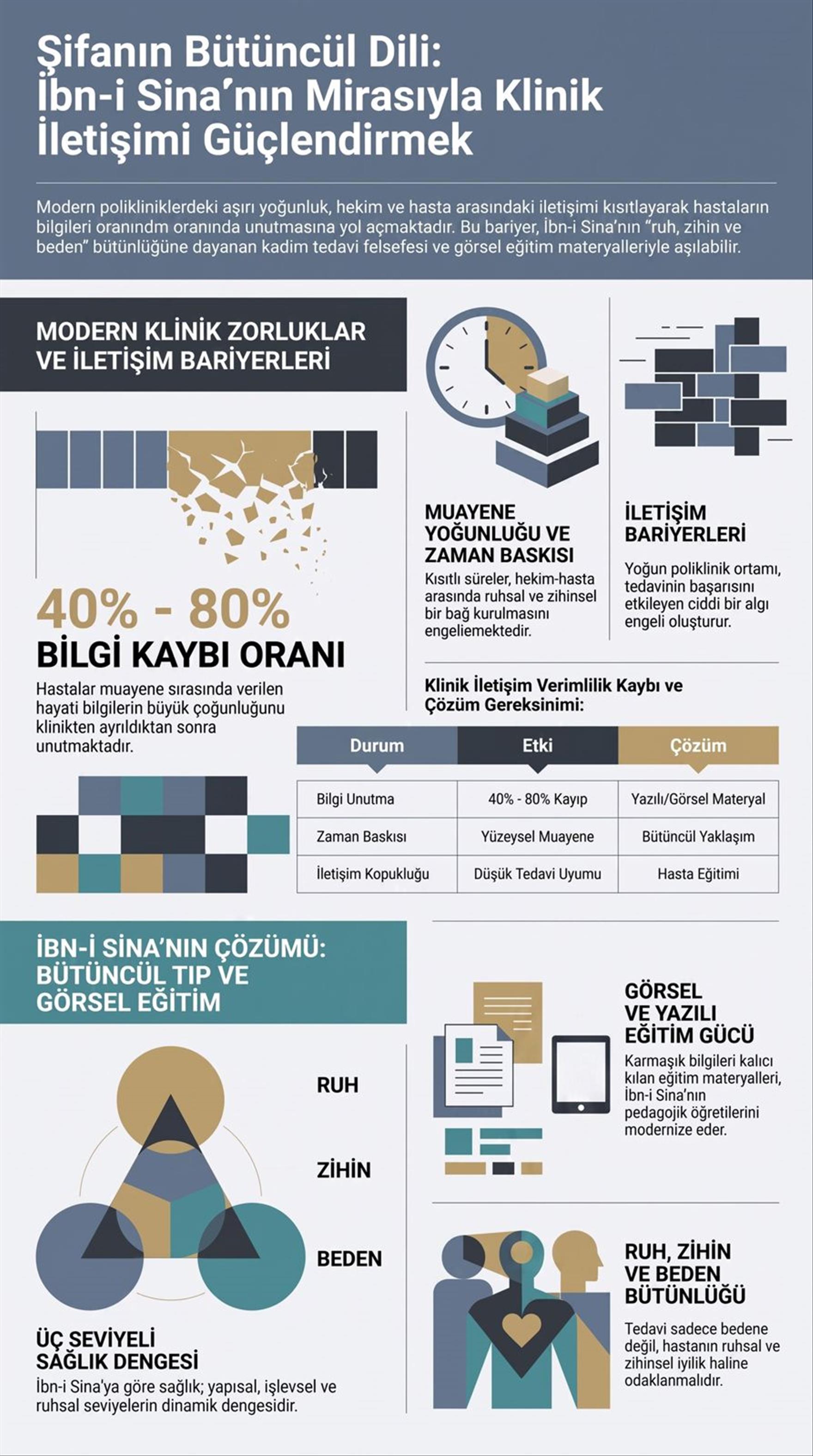
Within this framework, this approach, which also aligns with Avicenna’s holistic approach to medicine, aims to support patients’ active participation in their treatment processes through written and visual materials in addition to verbal information provided to patients.
The practices and evaluations brought to the agenda on the occasion of Avicenna Week draw attention to the similarities between Avicenna’s holistic approach to medicine, developed more than a thousand years ago, and the people-centered healthcare approach adopted at the PAU Faculty of Medicine. Placing importance on efforts to strengthen patient-physician communication by combining the technological possibilities of modern medicine with a people-centered approach to medical practice, Pamukkale University Faculty of Medicine emphasizes that patient education is an important tool, particularly in busy outpatient clinic conditions, to help patients better understand the health information conveyed to them and properly follow their treatment processes.
Patient-Centered Approach at PAU Faculty of Medicine
At PAU Faculty of Medicine, attention is drawn to the importance of evaluating patients not only based on their current disease and physical symptoms but also in relation to their living conditions, dietary habits, psychological state, and daily lifestyle. This approach also aligns with Avicenna’s understanding of medicine, which considers the patient as a whole in terms of physical, psychological, and mental aspects. In Avicenna’s clinical methodology, it is stated that physicians should take into consideration the environment in which their patients live, their occupation, dietary and sleeping habits, and psychological state when evaluating them. At PAU Faculty of Medicine, it is likewise emphasized that, in addition to the diagnostic and treatment opportunities offered by modern medicine, establishing healthy communication with patients, listening to them, and ensuring that they have sufficient information about their treatment process are integral parts of healthcare.
Strengthening Communication in Busy Outpatient Clinics
Increasing patient density in the healthcare system can limit the time physicians are able to devote to their patients, and this can directly affect patient-physician communication. At PAU Faculty of Medicine, attention is drawn to the need to evaluate this issue not only in terms of examination time but also in terms of patients’ adherence to treatment.
Patients’ anxiety during examinations, the high volume of outpatient clinics, and the large amount of medical information conveyed to them within a short period of time can cause some of the recommendations provided to be forgotten or incorrectly remembered.
For this reason, PAU Faculty of Medicine emphasizes the understanding that patient-physician communication should not be limited to verbal information provided in the examination room.
Verbal Information Supported by Written and Visual Materials
An important element of the approach to patient education at PAU Faculty of Medicine is making the information provided to patients understandable and easier to retain. In this context, in addition to verbal information, it is important to use written and visual educational materials that patients can review again later. Supporting materials prepared in plain language that patients can understand with visuals, diagrams, and follow-up charts contributes to making the treatment process easier for patients to understand.
Particularly in the follow-up of chronic diseases, materials showing patients when to take their medications, what to pay attention to in their diet, and how to carry out their daily health monitoring enable the information provided by the physician to remain sustainable after the examination. Thus, after leaving the healthcare facility, patients have the opportunity to review the information provided to them and continue their treatment in a more informed manner.
Aiming to Improve Treatment Adherence
One of the main objectives of the approach implemented at PAU Faculty of Medicine is to improve patients’ adherence to treatment. Accurate patient information is particularly important in chronic diseases such as diabetes, hypertension, and heart failure, which require regular medication use and lifestyle changes. Similarly, during pregnancy follow-ups, it is important for expectant mothers to correctly understand information provided about vitamin use, nutrition, and risk factors for maternal and infant health.
Through communication supported by patient education materials, patients are intended to become active participants in managing their own health rather than merely passive recipients of their treatments. This approach is also considered capable of contributing to reducing repeat visits resulting from non-adherence to treatment and to the more effective delivery of busy outpatient services.
Avicenna’s Thousand-Year Legacy Meets Modern Medicine at PAU
The patient-centered approach adopted at PAU Faculty of Medicine also demonstrates how Avicenna’s understanding of medicine can be reflected under contemporary conditions. Avicenna’s holistic approach, which placed not only the disease but also the person at the center and regarded nutrition, the environment, psychological state, and lifestyle as integral parts of health, once again highlights the importance of patient-physician communication in modern healthcare.
Avicenna’s practice of conveying complex medical knowledge through different methods to make it easier to learn and remember also aligns with the importance given to patient education at PAÜ Faculty of Medicine. Being able to understand, remember, and apply the information provided in daily life is considered an important part of treatment.
PAU Faculty of Medicine Emphasizes People-Centered Medical Practice
Pamukkale University Faculty of Medicine aims to train physicians who can not only effectively use the technological opportunities of modern medicine but also listen to their patients, communicate with them effectively, and place preventive medicine at the center of their practice.
In line with this approach, the Faculty considers patient education an important component of healthcare services and places importance on raising patients’ awareness of managing their own health and strengthening the physician-patient relationship.
In this respect, Avicenna Week provides an important opportunity to reconsider the holistic approach to health of Avicenna, one of the most important scientists in the history of medicine, which has reached us from a thousand years ago, together with modern medical practices.
The approach adopted at PAU Faculty of Medicine emphasizes that, alongside accurate diagnosis and treatment, effective communication, understandable information, and effective patient education are also integral parts of healing.
Patient information notes on diseases prepared for patients at the Dermatology and Venereal Diseases outpatient clinic can be accessed through the following link: https://www.pau.edu.tr/dermatoloji/tr/sayfa/hasta-bilgilendirme-formlari