
40th International Public Finance Symposium Opens with the Participation of Rector Prof. Dr. Mahmud Güngör
The 40th International Public Finance Symposium, organised by the Department of Public Finance at Pamukkale University (PAU) Faculty of Economics and Administrative Sciences (FEAS), opened in Antalya with the participation of Rector Prof. Dr. Mahmud Güngör. Held under the theme “The Implications of Global Uncertainties and Opportunities for Public Finance,” the symposium brings together national and international academics and public administrators from October 22 to 25.
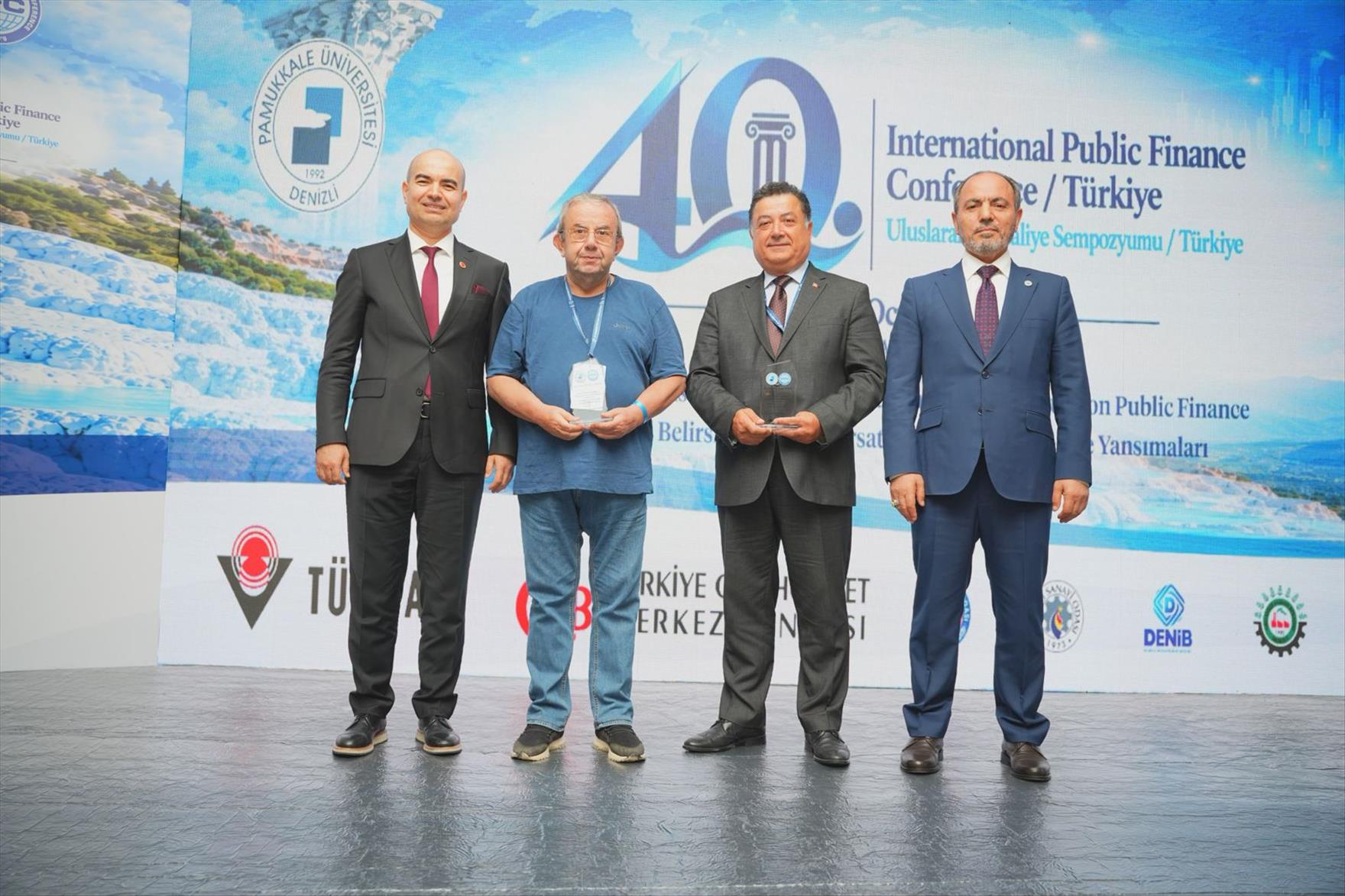
The 40th International Public Finance Symposium, organised this year by the Department of Public Finance at PAU Faculty of Economics and Administrative Sciences, opened in Antalya with the participation of Pamukkale University Rector Prof. Dr. Mahmud Güngör. The opening ceremony was attended by Vice Rector and Executive Board Member of the Tax Council Prof. Dr. Ersan Öz, PAU FEAS Dean Prof. Dr. Ender Coşkun, bureaucrats from ministries and public institutions, as well as academics, researchers, and postgraduate students from Türkiye and abroad.
The ceremony began with a moment of silence and the Turkish National Anthem, followed by a tribute presentation honouring distinguished scholars in public finance. Opening speeches were delivered by Assoc. Prof. Dr. Ersin Yavuz, Chair of the Organising Committee and Head of the Department of Public Finance; Dean Prof. Dr. Ender Coşkun; and Rector Prof. Dr. Mahmud Güngör.
Rector Güngör: “In Our Civilisation, Justice Is the Pillar of the State”
Expressing his pleasure at being part of a well-established 40-year academic tradition, Rector Prof. Dr. Mahmud Güngör emphasised that public finance should be considered not only in terms of the treasury but also in relation to justice, labour, and human well-being. Referring to Kutadgu Bilig, which states that a state needs an army to remain standing, a treasury to sustain its army, a prosperous population to strengthen its treasury, and justice to ensure the welfare of its people, Rector Güngör also recalled Ibn Khaldun's observation that an increasing tax burden could weaken production. The Rector stated, “Where there is no justice, there is no trust; where there is no trust, there is no production; and where there is no production, there can be no lasting prosperity.”
Rector Güngör noted that the symposium's theme addressed one of the most significant issues of our time. Pointing out that regional conflicts, energy crises, climate change, and technological developments were profoundly affecting economic balances, the Rector emphasised that people should be at the centre of the economy and justice at the foundation of state administration. Drawing attention to how green transformation, digital tax systems, data-driven auditing, and artificial intelligence applications were reshaping public finance, Rector Güngör called on young participants attending the Young Public Finance Professionals sessions to think big, work hard, and never forget their responsibility to the nation. At the end of his speech, Rector Prof. Dr. Güngör thanked the Ministry of Treasury and Finance, the Tax Council, members of the scientific committee, participating scholars, and the academics from the Department of Public Finance who contributed to the organisation of the symposium.
Service and Appreciation Plaques
Rector Prof. Dr. Mahmud Güngör presented service plaques to Prof. Dr. Kâmil Tüğen and Prof. Dr. Metin Erdem, who retired from the Department of Public Finance, in recognition of their contributions to the university and the field of public finance. Following the presentation entitled “Supporting Public Finance Through Collective Wisdom: The Tax Council and Its Activities” by Tax Council President Abdullah Erdem Cantimur and Executive Board Member Prof. Dr. Ersan Öz, a plaque of appreciation was also presented to the Tax Council. The final invited speaker of the day, Prof. Dr. Mehmet Balcılar from the University of New Haven, delivered a presentation entitled “Who Can Still Act? Fiscal Space in an Age of Uncertainty.”
The symposium will feature papers on defence spending and geopolitical risks, green transformation and environmental taxation, public debt and fiscal sustainability, local government finance, behavioural public finance, tax law, and Ottoman fiscal history. Following the parallel sessions, the symposium will conclude on Sunday, October 25.